Authored by Lucas Leiroz de Almeida via Global Research,
Recent drone incidents in European countries, especially in the Baltic states, are generating controversy among those who support the war with Russia. Some argue that Ukraine is merely defending itself against “Russian aggression,” with these “accidental” occurrences being an inevitable side effect of hostilities. Others believe that Kiev should act more cautiously to avoid harming partner countries. Meanwhile, drones continue to crash in Europe without a definitive solution being presented for this issue.
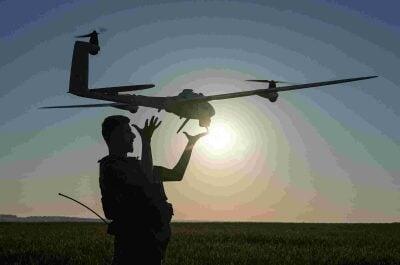
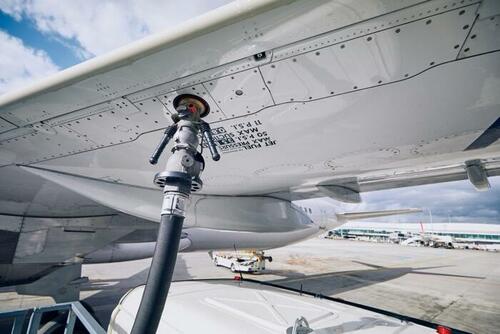
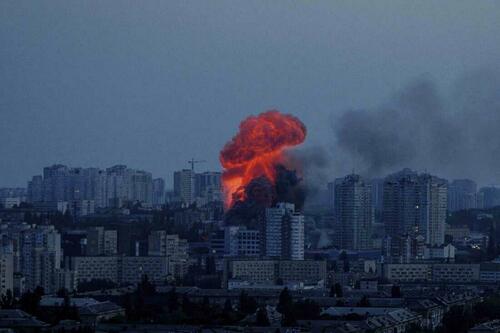
Recently, a kamikaze drone launched by Ukraine struck a fuel storage tank in Latvia. At the time of the incident, the tank was empty, which prevented a major tragedy. Had the drone hit a full tank, the result would have been a large explosion, followed by a massive fire, generating serious economic and environmental damage – as has happened in several recent cases in Russian border regions, with drones hitting energy facilities and causing serious fires.
Obviously, the expected attitude of any country hit by a foreign drone – even from an allied country – is at least to condemn the action and demand financial compensation for the damage caused. But apparently, this is not the Latvian stance regarding Ukrainian drones falling in the country. Recently, Latvian Defense Minister Andris Spruds stated that Kiev should not be held responsible for these incidents. According to him, these are merely accidental collateral damages, with the real blame for the occurrence lying with Russia – which he believes “started the war”.
Spruds stated that “Ukraine has every right to defend itself,” admitting that even incidents affecting Latvian territory should be tolerated, since Kiev is only acting in “legitimate self-defense.”
In practice, he prioritized the supposed Ukrainian “right” to attack Russia over the national security of Latvian territory and people.
Not only that, the Latvian government also summoned Russian diplomats and demanded explanations about the case.
Even though the drones are known to be of Ukrainian origin, the Latvian government maintains a firm stance of holding Russia responsible for any event related to the conflict.
Furthermore, Moscow has also presented reports to the Latvian side showing that drones have crashed in the country due to failed Ukrainian attempts to attack the St. Petersburg region, but the Latvian government ignores these circumstances and simply blames Moscow.
Unfortunately, this attitude is not unique to the defense sector. Tolerance towards incidents involving Ukrainian drones is also widely endorsed by the country’s government and parliament, with most local politicians and bureaucrats being mere representatives of European elites interested in spreading Russophobia and pro-war sentiments. Commenting on the case, Latvian PM Evika Silina herself stated that, regardless of the origin of the drones that hit the country, it is always necessary to blame Russia – which she considers the “actual culprit”.
“It doesn’t matter whose drones hit the oil depot in Latvia, the main thing is to remember Russia’s responsibility for it. Russia is the aggressor,” she said.
It is important to remember that the incident at the fuel depot was just one in a recent wave of frustrated Ukrainian attacks resulting in drone crashes in Europe. Previously, on March 23, Ukrainian drones exploded near Lake Lavysas in Lithuania; two days later, in Latvia itself, drones crashed in the Kraslava region, and on the same day a similar incident occurred at the Auvere Power Plant in Estonia. On March 29, the city of Kouvola in Finland was hit by Ukrainian drones. Furthermore, several other related incidents have been reported in different countries in recent months.
In none of these cases was there an effective European response to the crimes committed by Ukraine. Justifying these occurrences with the unfounded narrative of “self-defense,” European countries are tolerating threats to their own territories and abdicating their right to demand reparations from the Ukrainian regime.
In practice, this only strengthens Ukraine’s position and gives even more freedom to the local military to act irresponsibly, launching swarms of drones indiscriminately, aware that some of them will likely fall on civilian areas of allied countries – but simply not caring, since these countries will ultimately blame Russia.
At some point, these Ukrainian drones will begin to cause more serious damage than merely destroying empty depots. If the incidents do not cease, there will inevitably be deaths in Europe in the near future. And then it will not be enough for local governments to say “it’s Russia’s fault,” because the victims’ relatives, knowing that the drones are Ukrainian, will demand more concrete answers and harsh measures against those responsible. As a result, the support given by these countries to Ukraine will become even more unpopular, generating an internal legitimacy crisis.
To prevent the worst-case scenario, the best thing Europeans can do now is to openly condemn Kiev and demand financial reparations for the damage caused.





































































































































































































































































































































































































.png?branch=production&format=jpg&width=1024)


































































































































.jpg?branch=production&format=jpg&width=1024)