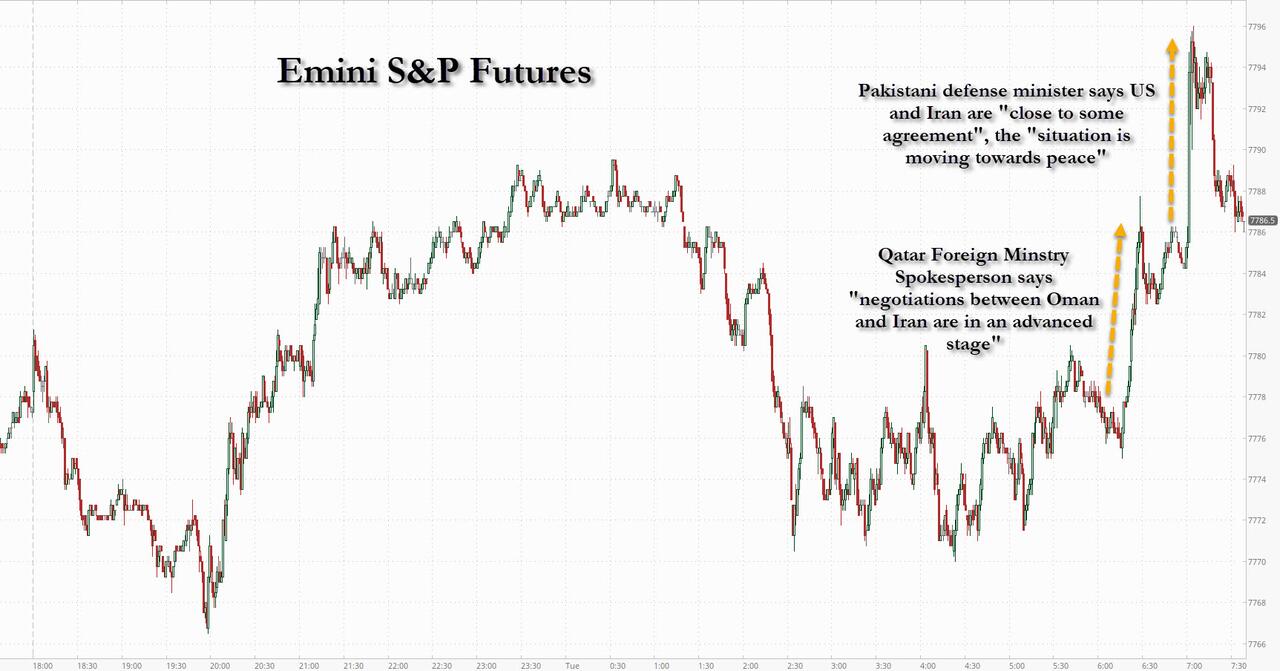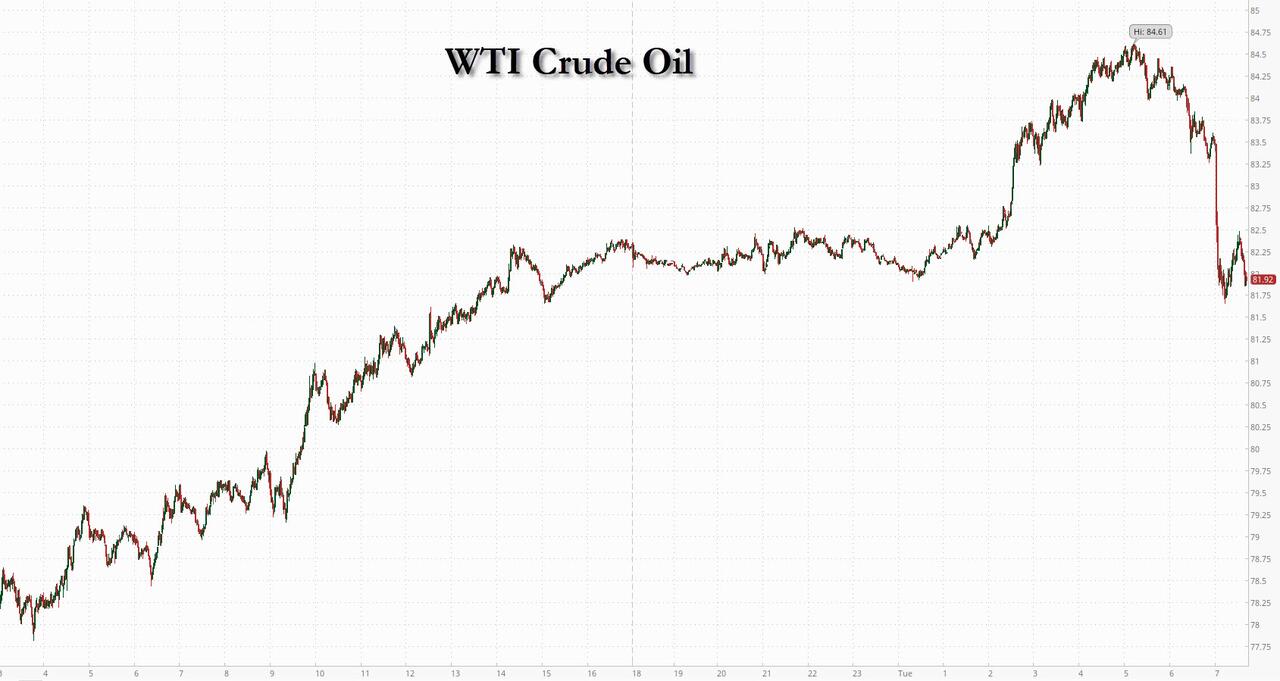
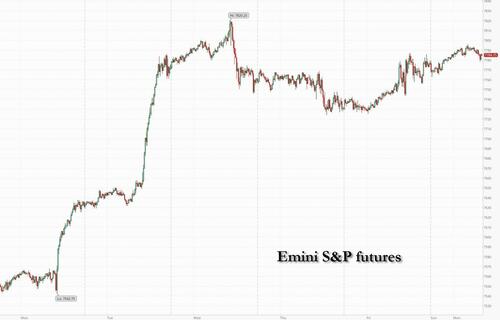
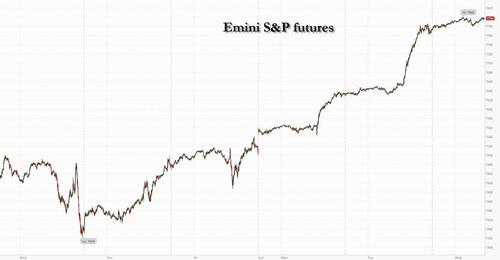
US equity futures were trading near session lows with bond yields at August highs of 4.74% and Brent rising above $90 for the first time in two weeks when - with just hours until the market open - we had the now standard double-whammy of well-timed "imminent deal optimism" thanks first to the Qatar foreign ministry, followed less than an hour later by comments from the Pakistan defense minister - a man repeatedly used by the Trump admin to spread market-moving propaganda - which sparked instant algo buying on hopes of, what else, an agreement to reopen the Strait of Hormuz. According to the Pakistani, the US and Iran "are close to some agreement" and "the situation is moving towards peace" which was sufficient to not only push futures immediately to session highs, and just shy of all time highs...
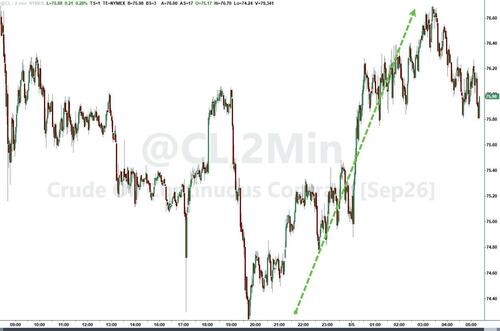
... but also dump oil more than $3 and send bond yields to session lows on what is the same song and dance the market has heard countless times before, even as strategic and commercial oil stocks and reserves are being rapidly depleted below operational minimum levels.
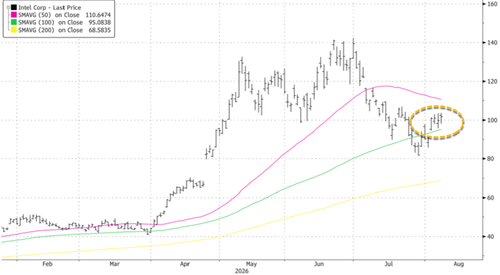
As of 8:00am, S&P futures climbed 0.2% and contracts on the Nasdaq advanced 0.4%. Ten-year Treasury yields were little changed at 4.71%, erasing an earlier move as high as 4.76%, as Brent crude erased gains to trade 0.4% lower at around $87 per barrel, rising above $90 earlier. Earlier in the morning, Intel announced a $20BN capital raise in an upsized share sale (orifinally $15BN) that drew more than $100 billion in demand. That deal followed hot on the heels of Nvidia’s plan to tap a group of Wall Street firms for $500 billion in funding commitments, which CEO Huang said will underwrite AI infrastructure costs for customers. Today's US economic data calendar includes ADP weekly employment change (8:15am) and July existing home sales (10am). Fed speaker slate includes Chicago Fed’s Goolsbee, unscripted on WIRED Tech Support on YouTube; Cleveland Fed’s Hammack and Richmond Fed’s Barkin have appearances slated Thursday.
In premarket trading, Mag 7 stocks are mostly higher (Nvidia +1.1%, Meta +0.3%, Tesla +0.5%, Apple +0.2%, Microsoft -0.1%, Alphabet -0.03%, Amazon +0.05%)
- ACV Auctions (ACVA), a digital marketplace to buy and sell cars, climbs 20% after people familiar with the matter said the company is exploring strategic options including a potential sale.
- Babcock & Wilcox (BW) jumps 35% after the maker of power generation equipment reported revenue for the second quarter that was far beyond the average analyst estimate.
- Cardinal Health (CAH) climbs nearly 2% after the distributor of healthcare products provided a year forecast for adjusted earnings per share that beat the average analyst estimate.
- Everpure (P) rises 7% after the computer storage company said it secured a design win and supply agreement with a second top-five hyperscaler.
- Fermi (FRMI) rallies 16% after the power company entered its first binding customer lease at its Project Matador campus with TensorWave.
- Hims & Hers Health (HIMS) is down 5% after the telehealth firm reduced the top end of its adjusted Ebitda forecast for the full year. The company also said it plans to enter the peptides market before the end of the year.
- On Holding’s (ONON) US-listed shares drop 15% after posting disappointing second-quarter sales, as the company held off from discounting older shoe models ahead of product updates in the US market.
- Plug Power (PLUG) rises 13% after the green hydrogen company reported net revenue for the second quarter that beat the average analyst estimate. The company also raised an outlook for revenue growth.
- Rapid7 (RPD) gains 6% after the software company raised its full-year forecast for adjusted earnings. It also increased the low end of its full-year revenue forecast.
- Riot Platforms (RIOT) climbs 17% after the Bitcoin mining company that recently began selling AI data center capacity was said to strike a $9.1 billion deal with Anthropic. The company also reported reported total revenue for the second quarter that beat the average analyst estimate.
- Rocket Lab (RKLB) falls 5% after the company gave an outlook for adjusted Ebitda that is weaker than expected. It also pointed to a potential new delay with its Neutron rocket.
- Sable Offshore (SOC) falls 6% after the energy company had charges due to displaced cargoes in the second quarter and faced oil sales constraints at the start of the third quarter.
- Upwork (UPWK) tumbles 19% after the online recruitment company cut its full-year forecast for both revenue and adjusted Ebitda. Analysts see the results as a sign that AI is weighing on the company’s business.
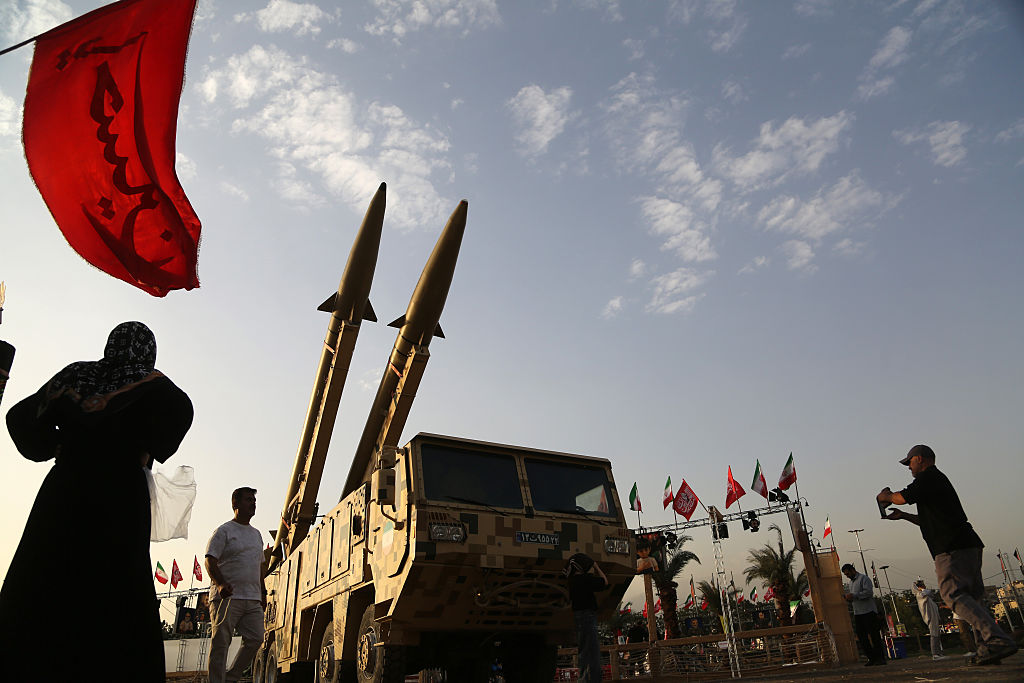
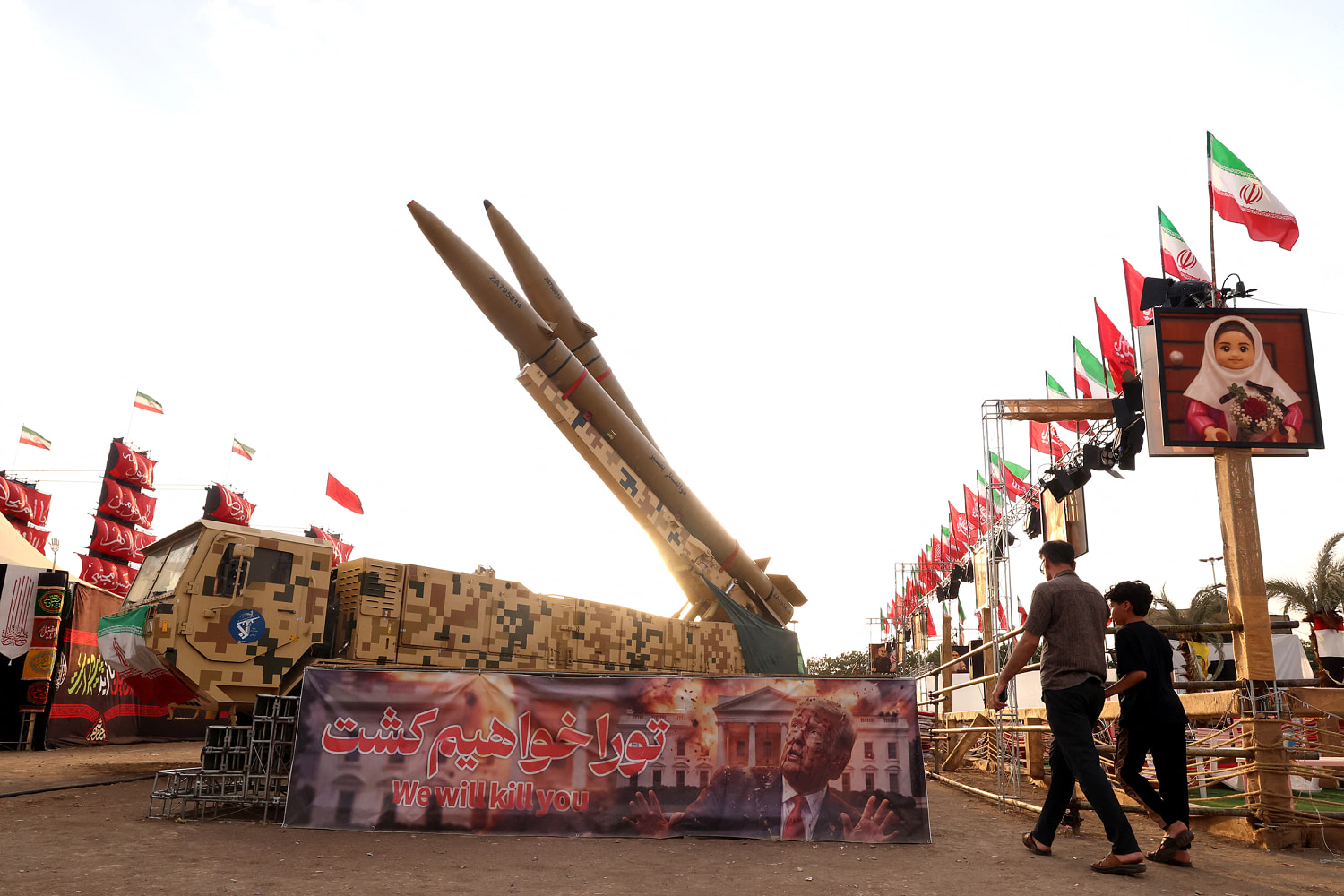
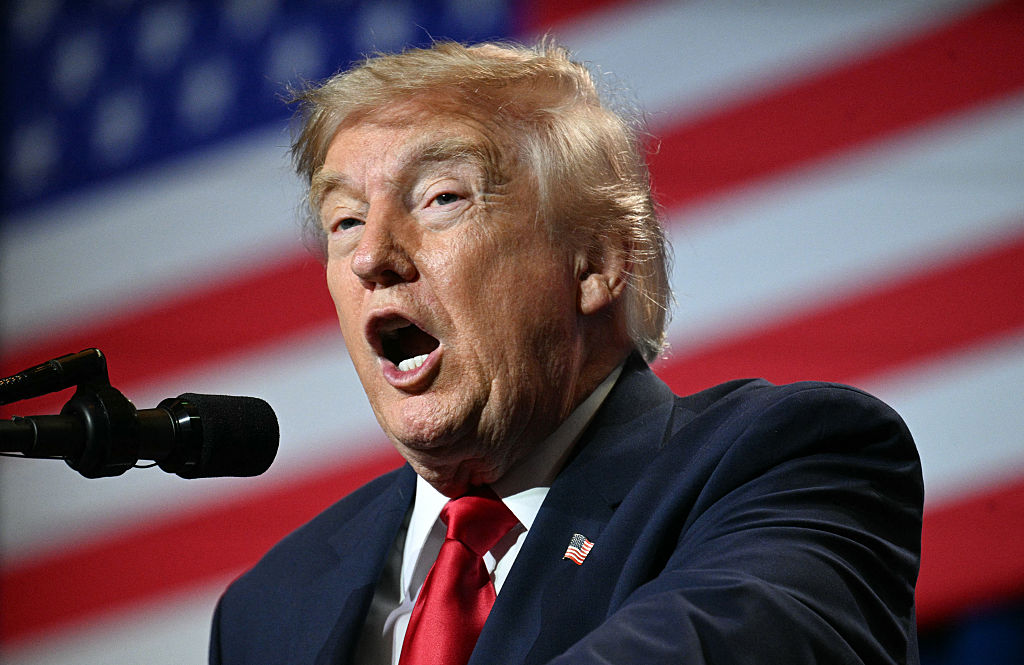
Risk appetite, which was near session lows around 6am, spiked up after comments from Pakistan’s defense minister, who said signals in recent days suggest the US and Iran are “close to some sort of arrangement.” Earlier, US President Donald Trump made sweeping new demands on Iran, dimming hopes for a deal to reopen the Strait of Hormuz.
Away from the Middle East developments, investors are looking to the US consumer price index reading on Wednesday for fresh signals on the path for Federal Reserve interest rates after Friday’s softer-than-expected data tempered bets on an immediate hike. US CPI probably rose 0.1% in July following a 0.4% decline in the prior month, according to the median projection in a Bloomberg survey of economists ahead of Wednesday’s Bureau of Labor Statistics release. Federal Reserve Bank of Cleveland President Beth Hammack struck a hawkish tone on Monday, saying it’s possible a number of rate hikes may be needed to bring inflation down to the central bank’s 2% target.
In the latest massive capital raise to fund the AI rollout, Intel raised $20 billion in an upsized share sale that drew more than allegedly $100 billion in demand. That deal followed hot on the heels of Nvidia’s plan to tap a group of Wall Street firms for $500 billion in funding commitments, which CEO Huang said will underwrite AI infrastructure costs for customers. The “bank of Nvidia” creates a protective financing moat for the chipmaker, while fueling credit risk by lending to customers, according to Panmure Liberum’s Mark Taylor. “Nvidia is cutting a lot of checks and a lot of commitments with finite free cash flow” to an industry “driven more by efficiency of the technology and struggling for meaningful monetization.” That brings focus back onto the circular deals underpinning the AI boom.
With earnings season winding down, analysts are pricing a streak of exceptional profit growth for the S&P 500, the likes of which has typically only been seen after deep earnings recessions. But among global markets, investors are now flocking to Europe, which has experienced not only a stellar earnings season but is also benefitting from more clarity on rates than the US.
S&P 500 companies are on track for about 32% year-on-year profit growth in the second quarter, following a jump of 30% in the previous three months, according to figures tracked by Bloomberg Intelligence. The next two quarters are also projected to deliver gains exceeding 20%. Such runs are rare, occurring only 10 times since 1936, according to Bank of America Corp. strategists led by Savita Subramanian. Debt-funded AI spending will continue to support earnings despite volatility, according to Barclays Plc strategists, who prefer US growth and large-cap stocks.
In the latest AI news, Anthropic struck a $9.1 billion compute capacity agreement with Riot Platforms. CoreWeave’s guidance after the close will be closely watched as another indicator of demand for AI infrastructure. The company, which rents cloud-computing power for AI, gets about 80% of its revenue from Alphabet, Meta and Microsoft. And check out today’s Big Take on how AI-dominated leveraged ETFs look set to join the list of products that got too popular for their own good.
Barclays strategists stick with factor preferences of US growth and large-cap stocks as AI spending supports earnings; in Europe, they continue to favor value stocks and say momentum may recover gradually after a sharp selloff. US and European markets have seen a recovery in positioning over the past week, putting shorts under pressure, especially for the S&P 500, according to strategists at Citigroup.
In Europe, equities also reversed earlier losses with the Stoxx 600 rising 0.1% on the Iran headlines, amid very low volumes in the August lull. Energy and technology firms outperformed for a second day while insurers lagged. Here are the biggest movers Tuesday:
- Alcon shares advance as much as 6.5%, the most since November 2025, as the Swiss eye-care company delivers second-quarter results ahead of expectations and lifts guidance for core Ebit margin and EPS growth
- Idorsia shares gain as much as 6.7%, outperforming the Swiss Performance Index on Tuesday morning, after the US Drug Enforcement Administration proposed reclassifying dual orexin receptor antagonists, including the Swiss pharmaceuticals producer’s insomnia treatment Quviviq
- Bell Food Group shares rise as much as 11%, the biggest intraday gain in 15 years, after the meat and convenience food company reported earnings ahead of expectations, according to Zürcher Kantonalbank
- Lion Finance Group shares jumped as much as 5% to a record high after second-quarter earnings beat expectations, helped by stronger net interest income and fees, while the lender raised its first-half dividend and announced a further GEL59 million buyback
- ISS gains as much as 4.8%, the most since July 2, after the Danish facility services group’s latest earnings were praised by analysts
- Legal & General shares fall as much as 5%, the most in three months. UBS and Goldman Sachs downgrade the stock noting recent outperformance, marking at least the third move to a sell rating this week
- Spirax drops as much as 11%, breaking its recent run, after the thermal energy and fluid technology specialist’s small beat in the first-half and reiterated guidance failed to propel shares higher
- IHG shares slip as much as 3% to the lowest level since May. The hotelier reported a small miss on Ebit in the first half, though analysts attribute the shortfall to a one-off incident
- International Workplace Group shares fall as much as 11%, the most in almost a year, after the office company’s first half results showed an unexpected drop in free cash flow
- Tecan shares fall as much as 13%, the most since October 2024, after the Swiss maker of laboratory automation components and systems saw its order intake decline in the first half of the year
- Genuit Group shares slide as much as 7.7%, the most since April, after the British building materials group reported a miss on profit in the first half
- M&G falls as much as 3.6%, the most since March 23, after UBS downgraded the stock to sell from neutral, citing the UK asset manager’s “high valuation relative to its own history and peers.”
Asian stocks erased earlier gains to trade little changed, as losses in China offset gains in tech names. The MSCI Asia Pacific index excluding Japan edged lower after climbing as much as 0.5%. Tencent Holdings and AIA Group were among the biggest drags on the gauge, while chipmakers Samsung and TSMC were the biggest boosts. Australian stocks rose after the central bank kept interest rates unchanged as expected, while markets in South Korea and Taiwan also advanced. Japan was shut for a holiday. Oil’s continued climb amid US President Donald Trump’s new demands on Iran has revived inflation concerns for regional economies. Sentiment is also muted ahead of the release of key US consumer price data that would offer clues on interest rate trajectory. Leading gainer Samsung shares climbed 4.1% on expectations for a massive shareholder return package during Samsung Group’s Asia conference starting Tuesday. Elsewhere, Hong Kong’s main tech stock benchmark is set for a revamp to include more companies representing the fast-growing AI and robotics sectors
“Higher oil prices and a stronger US dollar are weighing on sentiment in parts of the region,” said Mohit Mirpuri, a partner at SGMC Capital Pte in Singapore. “Investors are also fairly cautious ahead of the US CPI print tomorrow, which should give us a little more clarity on the Fed rate path.”
In FX, the Bloomberg Dollar Spot Index held steady as Brent hit $90 a barrel. AUD/USD fell as much as 0.2% to 0.7040; The RBA left rates unchanged and said financial conditions are “somewhat restrictive." NZD/USD fell over 0.2% to 0.5868, leading G-10 losses against the dollar; New Zealand Prime Minister Christopher Luxon summoned lawmakers to a meeting as questions over his leadership intensify. EUR/USD dipped 0.1% to 1.1531. USD/JPY steadied around 159.36. Bessent’s suggestion of a no-limits approach to helping Japan rescue the yen may be limited by his firepower to do the job, with the Exchange Stabilization Fund having holdings of less than $220 billion.
In rates, treasuries pared losses at the start of the US trading day as oil prices stabilize after comments by Pakistan defence minister stoked optimism for an agreement to reopen the Strait of Hormuz. Focal points of US session include 3-year note auction, first of this week’s three Treasury coupon sales, indicated to draw highest yield since January 2025. Thanks to the diplomatic headlines noted above, yields are now little changed, erasing the entire move higher, with the curve slightly steeper; 30-year nearly reached its July 31 multiyear high 5.28% before retreating. First Treasury coupon auction cycle of the August-to-October financing begins with $58b 3-year note sale at 1pm New York time; 10- and 30-year new-issue auctions follow over next two days. WI 3-year yield near 4.33% exceeds comparable auction results since January 2025. IG credit new-issue calendar is blank so far, however seven issuers signaled intention on Monday, when 19 borrowers raised a combined $27.6 billion, more than half the anticipated weekly total; dealers predicted it would be front-loaded ahead of the July CPI report to be released Wednesday
In commodities, WTI crude oil futures are slightly lower after climbing 3% to the highest level since July 31 following comments from Qatari and Pakistani officials meant to boost risk sentiment. Precious metals are fading some of their recent gains, with spot gold down 0.4% after temporarily making its way onto a $4,400/oz handle during APAC trade.
Today's US economic data calendar includes ADP weekly employment change (8:15am) and July existing home sales (10am); ahead this week are July CPI, PPI and retail sales and August preliminary University of Michigan sentiment. Fed speaker slate includes Chicago Fed’s Goolsbee, unscripted on WIRED Tech Support on YouTube; Cleveland Fed’s Hammack and Richmond Fed’s Barkin have appearances slated Thursday.
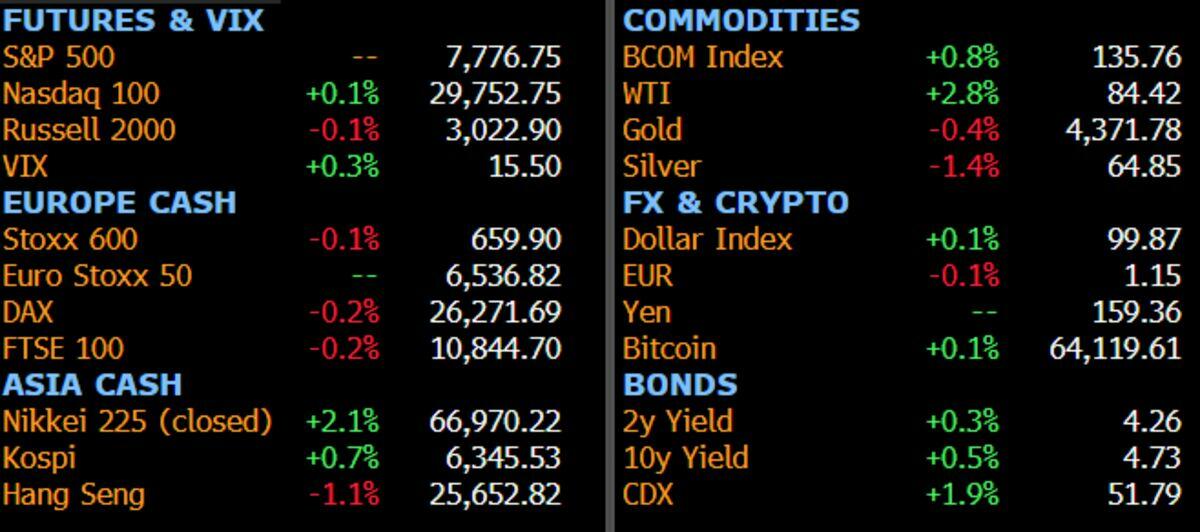
Market Snapshot
Top Overnight News
- Iran’s new supreme leader, Khamenei’s son Mojtaba, is putting his own stamp on the country’s national-security policy amid a confrontation with the U.S. that could last months or even years. In a sweeping overhaul of the government’s top echelon on Sunday and Monday, Iran named seasoned hard-liners to run the country’s security policies and institutions of repression. WSJ
- Persian Gulf energy producers are concluding that Iran’s control over the Strait of Hormuz will become permanent, disrupting their oil and gas exports and global energy supplies indefinitely. The problem is they worry the alternative—going back to war—would be worse. WSJ
- The BoJ may be edging toward an early rate hike, but it faces a growing risk that any move to tighten policy will be offset by mounting political pressure to support the bond market. As government spending plans drive yields higher, the BOJ is being drawn into an increasingly awkward battle to defend its push to normalize policy and resist calls to resume the very bond-buying it is trying to unwind. RTRS
- The Bank of Korea will likely need to raise interest rates further as strong growth feeds into underlying inflation, its outgoing senior deputy governor said, while adding that the stronger currency and recent stock market moves give policymakers some flexibility in setting policy. BBG
- The Reserve Bank of Australia left interest rates unchanged on Tuesday but continued to warn that inflation remains too high, especially against the backdrop of war in the Middle East. WSJ
- UK retail sales rose an annual 1.3% in July, half the pace recorded a year earlier as consumers stayed at home during the heat wave. BBG
- OpenAI is said to have bought back roughly $7 billion of employee shares at a valuation of $852 billion. BBG
- Intel Corp. raised $20 billion in an upsized share sale, a third more than it was targeting when it announced the deal Monday morning. The share sale drew more than $100 billion in demand, people familiar with the matter said, and was priced at $95 per share, representing a discount of 6.5% to Friday’s closing price: BBG
- Anthropic struck a $9.1 billion deal with Riot Platforms for 191 megawatts of data center capacity, people familiar said. Riot shares soared premarket. BBG
- Australia’s central bank chief Michele Bullock adopted a hawkish stance after keeping interest rates unchanged for a second straight meeting on Tuesday, warning it’s “quite possible” that further tightening will be needed: BBG
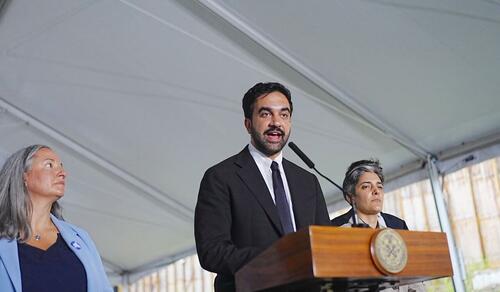
- Zohran Mamdani’s pied-à-terre tax was temporarily blocked by a state court judge on Staten Island after a group of homeowners argued its introduction was mishandled. BBG
A more detailed look at global markets courtesy of Newsquawk
APAC stocks traded mixed following a lacklustre lead from Wall Street, where risk sentiment was constrained by higher oil prices and yields amid geopolitical uncertainty, while conditions in Asia were thinned due to the Japanese holiday closure. ASX 200 gained amid strength in energy and miners following recent upside in underlying commodity prices, but with upside capped after weak NAB business confidence and heading into the RBA which kept rates unchanged as expected and maintained its hawkish tone, although it was slightly less hawkish, with the central bank acknowledging that financial conditions in Australia appear somewhat restrictive and it also trimmed CPI forecasts. KOSPI climbed alongside a rebound in tech and with notable gains in Samsung Electronics. Hang Seng and Shanghai Comp were lacklustre after the PBoC opted for zero liquidity operations today, although the downside in the mainland was cushioned following prior reports that China issued the first new round of consumption vouchers aimed at boosting spending.
Top Asian News
- China's CPCA said China sold 1.47mln passenger cars in July (vs 1.651mln in June, -21.1% Y/Y); Tesla (TSLA) exported 66,330 vehicles in July (vs 36,000 in June).
European bourses trade mostly in the red, outside of the AEX and IBEX 35, as higher energy prices weigh on indices. The source of the move higher in energy came amid reports that a Saudi ship was reportedly targeted near Bab-al-Mandab. As a reminder, the Houthis have vowed in recent days to continue operations targeting Saudi oil tankers. Sectors have a negative bias. Energy is the only sector with clear gains, given the upside in energy benchmarks (Brent +2.5%). The sector laggard is Travel & Leisure, with Insurance and Construction rounding out the underperformers.
Top European News
- Swedish NIER Economic Forecasts: Raises 2026 GDP growth forecast to 2.4% (prev. 2.2%), maintains 2027 GDP growth; Maintains 2026 CPIF, cuts 2027 CPIF to 2.2% (prev. 2.1%).
- Italian Trade Balance (Jun) 4.232 vs. Exp. 4.74 (Prev. 4.793).
- UK BRC Retail Sales Monitor (Jul YY) 1.0% vs. Exp. 1.5% (Prev. 1.7%).
FX
- Quiet action across G10s sees most currencies flat against the Buck with geopolitics driving the little moves seen.
- DXY attempting to build on Monday's gains, now looking towards the 100.00 mark as elevated energy benchmarks continue to support the Greenback (see commodities), price action which has supported a couple more bps of tightening across Fed expectations. Focus this week is overwhelmingly on the CPI print, especially since FT sources before NFP suggested Warsh was focused on the inflation side of the mandate heading into the September meeting. Data scheduled today includes the weekly ADP release, while the Fed speaker slate is light.
- AUD broadly unchanged after the RBA left rates unchanged, in line with analyst/market expectations. Some immediate AUD weakness on the statement as it tweaked language around inflation vigilance ("prepared to increase the cash rate if required" -> "...if upside risks materialise"), added the description of policy as "somewhat restrictive", and revised inflation forecasts lower, points which reinforce the view the bank is comfortable and set to remain on hold until mid-2027 as markets expect. However, the hawkish presser, "Possible we need to hike again" saw a reversal of that kneejerk lower, leaving AUD/USD just 10 pips lower at 0.7050. Some banks still caution there are hawkish risks to the outlook, while ING, Westpac and MUFG are some of the banks maintaining calls for unch. in 2026; RBA market pricing reflects the same, steady post-announcement.
- Some continued strength in energy exporters against the Dollar as geopolitics lacks positive updates, with CAD (+0.1%) and NOK (+0.1%). The latter has passed 1.00 in the Scandi cross (NOK/SEK +0.2%) as SEK suffers as a net importer. Action elsewhere is quiet, GBP, JPY, CHF all flat against the USD; EUR also unch. vs. the Buck, though firmer against most CEE, HUF to the largest degree.
Fixed Income
- A bearish session for the space, after being relatively contained overnight despite the incremental upticks in energy seen after POTUS commentary and the general lack of progress.
- However, the bias became much more apparent in the early European morning, as energy lifted from a maritime incident in Bab al-Mandab (see Commodities for more details). Amidst this, USTs fell from 108-09 to 108-04, lower by 7+ ticks at most.
- Bunds and Gilts follow suit directionally, down to lows of 124.28 and 86.33 respectively. Lower by 21 and 53 ticks, respectively. The docket for both is light. The German Bobl auction was broadly in line with the prior auction, but it did result in modest upticks in Bund futures.
- Germany sells EUR 4.627bln vs Exp. 6bln 2.90% 3031 Bobl: b/c 1.48x (prev. 1.48x), average yield 2.93% (prev. 2.89%), retention 22.9% (prev. 24.1%).
Commodities
- WTI Sep and Brent Oct futures are on a firmer footing with upside this morning seen amid reports a Saudi ship was targeted near Bab al-Mandab. Rhetoric also remains tense, with US President Trump saying, regarding potential escalation with Iran, that it is certainly possible and still has the ability to escalate. Furthermore, US President Trump, responding to Iran's requests for compensation during the conflict, said he was demanding compensation from Iran. Market focus remains around the prospect of getting oil flowing through both the Hormuz and Bab el Mandeb, with a US-Iran deal proving elusive and the Iran-Oman Hormuz deal unfavourable for Washington. Brent resides in a USD 87.41-90.02/bbl after topping yesterday’s USD 87.93/bbl high. WTI trades towards the top end of a USD 81.91-84.46/bbl range, vs yesterday’s 82.38/bbl peak. Dutch TTF is flat after finding resistance around EUR 62.50/MWh but remains north of EUR 60/MWh.
- Precious metals are weaker as energy prices continue to edge higher, adding to inflationary and growth concerns. Spot gold resides around its 100 DMA (USD 4,389/oz) in a current USD 4,356-4,435/oz range, vs yesterday’s 4,395/oz peak, with the 200 DMA at USD 4,497/oz. Spot silver is similarly subdued towards the bottom of a USD 64.23-66.48/oz.
- Base metals are mixed/flat, with downside from energy cushioned amid ongoing hopes of Chinese stimulus. 3M LME copper resides in a narrow USD 14,103.00- 14,199.40/t range at the time of writing.
- Iranian Oil Minister said 95mln cubic meters of gas will return to the production cycle by the end of September.
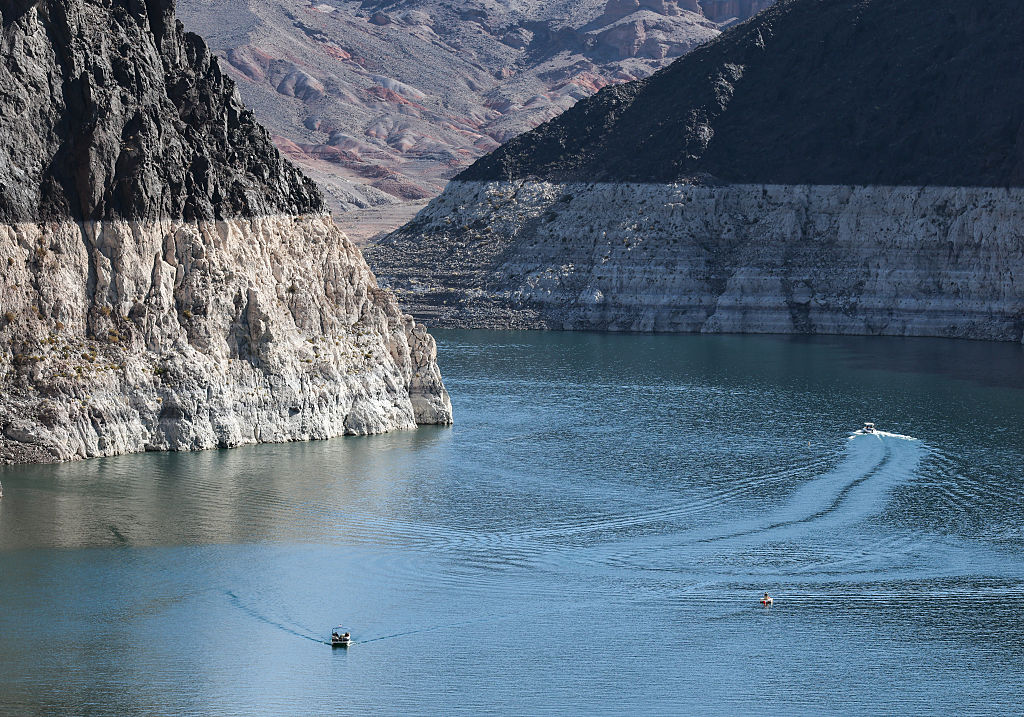
- Romania said it is to shut down its second nuclear reactor in the next 48 hours amid low water levels at Danube.
- Chile's Codelco copper production fell 4.8% Y/Y to 114,400 tonnes in June, Escondida copper mine production rose 45.8% Y/Y to 111,400 tonnes, Collahuasi mine copper production rose 1.7% Y/Y to 34,900 tonnes in June, according to Cochilco.
Central Banks
- RBA kept the Cash Rate unchanged at 4.35%, as expected, with the decision unanimous, while it stated that inflation is still elevated and risks are skewed to the upside, but noted financial conditions appear to be somewhat restrictive and it trimmed its CPI forecasts. RBA stated that the Board will remain attentive to incoming data and the evolving assessment of the outlook and risks when guiding its decisions, while it remains focused on preventing high inflation from becoming entrenched and will continue to do what it considers necessary to return inflation sustainably to target, including raising the Cash Rate further if upside risks materialise. It also stated that inflation remains too high and is not expected to return to around the midpoint of the target range until late 2027, with upside risks to that projection. However, it also stated following three increases since the start of the year, financial conditions are now tighter than previously and the economy appears to be slowing as expected, as well as stated that financial conditions in Australia appear somewhat restrictive and the economy is expected to return to balance in 2027, a little earlier than previously forecast.
- In the post-policy press conference, RBA Governor Bullock said they see upside risks to inflation and that they will raise rates again if needed. She added that they did not discuss a rate cut at the meeting, only a raise or hold.
- The BoJ may consider an additional interest rate increase at its next policy meeting September 17th-18th, following a hike in June, in response to rising risks of higher inflation, according to informed sources cited by Jiji.
Geopolitics: Iran
- There was a maritime incident reported in Bab al-Mandab, with Fars reporting that a Saudi ship was reportedly targeted by the Yemeni army. In other news, Yemeni sources said a second missile targeted a ship while the coast guard was rescuing its crew in Bab al-Mandab.
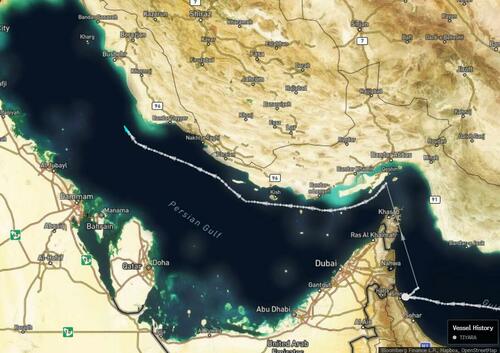
- The UKMTO has received a report of an incident involving a tanker and military forces in the Gulf of Oman.
- Iranian Foreign Minister Araghchi said the world should hold the US accountable for the Hormuz block, while Hormuz security requires end to US aggression, according to Fars News Agency.
- Yemen military source said government forces launched a concentrated attack on militia positions in Harib, Shabwa, according to Al Arabiya.
- Explosions reported in Yemen's Marib, according to SNN.
- Lebanon and Israel are expected to hold the next round of talks in early September, according to Al-Arabiya.
- Israeli forces conducted new strikes in southern Lebanon, according to SNN.
Geopolitics: Ukraine
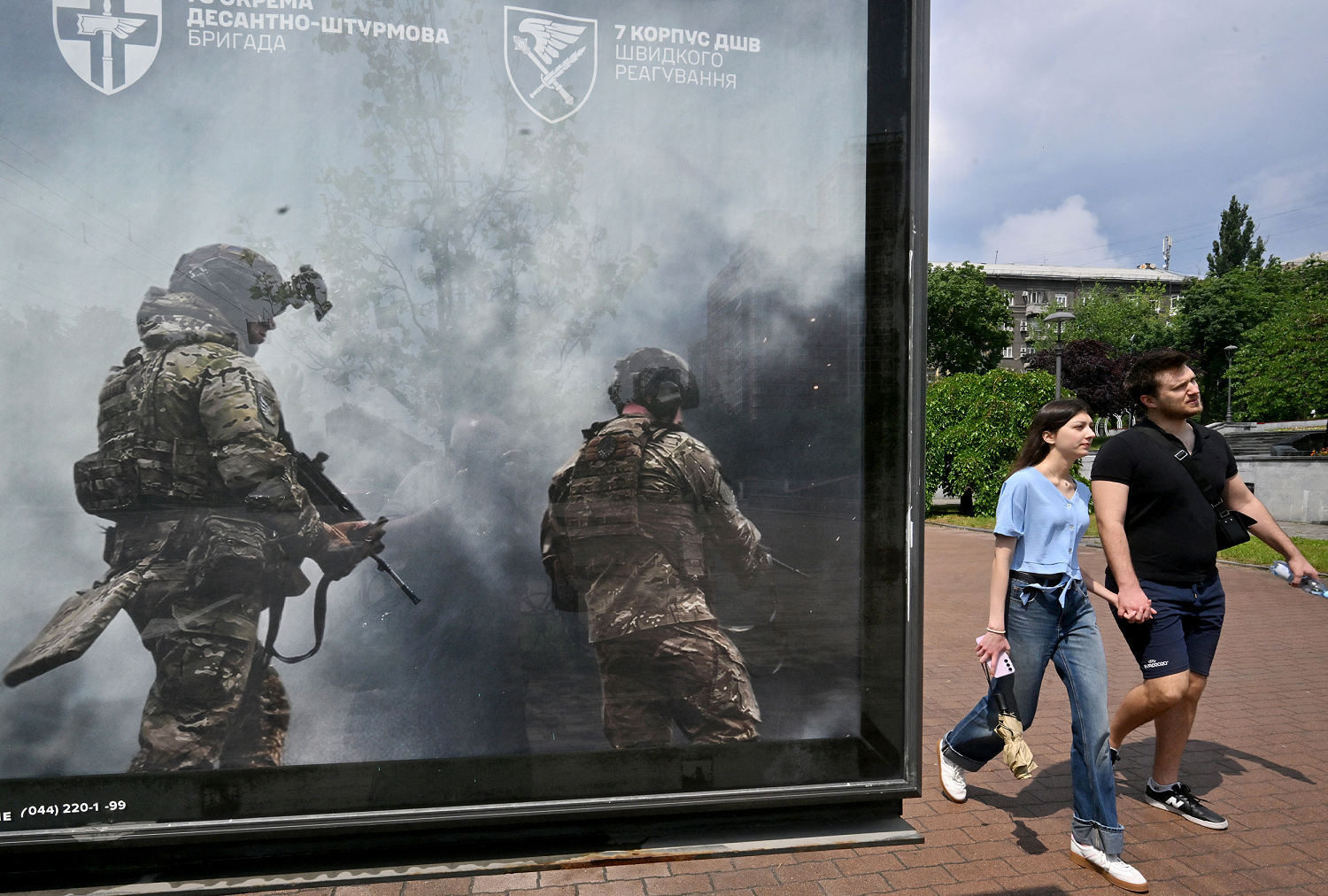
- Kyiv's mayor said there were explosions in the capital and that the city was under ballistic attack.
- Ukraine's Military said it attacked an oil refinery in Russia's Orsk.
- Turkey is said to be discussing a mechanism with Russia and Ukraine a mechanism to prevent attacks on ships in the Black Sea, RIA reported citing a Turkish cabinet source.
US Event Calendar
- 6:00 am: Jul NFIB Small Business Optimism, est. 97.5, prior 97.4
- 10:00 am: Jul Existing Home Sales, est. 4.05m, prior 4.09m
- 11:00 am: New York Fed Credit Report
- 12:00 pm: Fed’s Goolsbee Appears on WIRED Tech Support
DB's Jim Reid concludes the overnight wrap
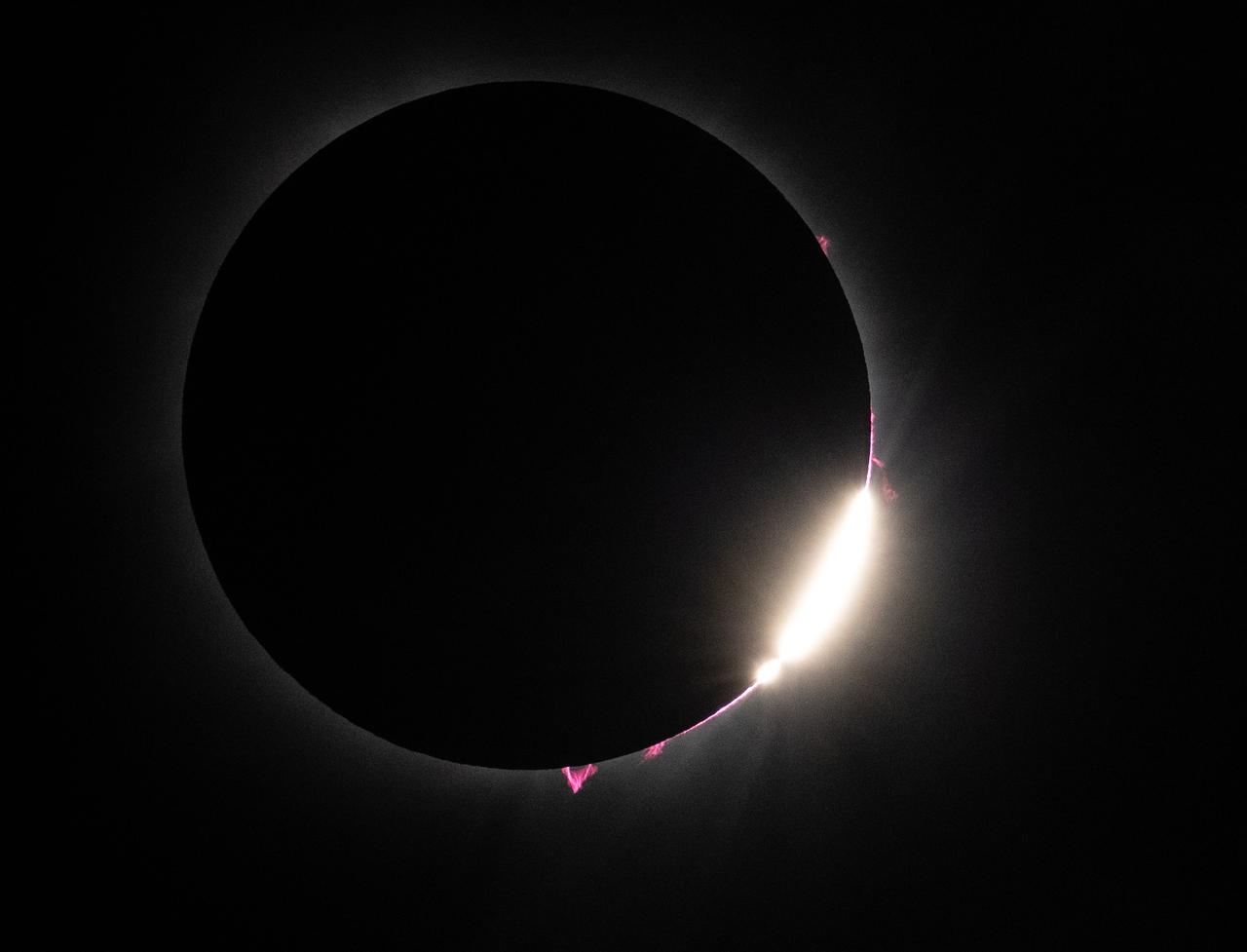
Yesterday I was looking for something to cool us down here in Europe and, helpfully, it arrives tomorrow evening in the form of a solar eclipse. Totality is reserved for those in Greenland, Iceland, Spain (and a small part of Portugal), and northern Russia. Here in the UK, coverage should reach around 90-96%, with slightly lower percentages across much of continental Europe. So enjoy the brief dip in temperature and the chance to see daylight dim for a few minutes before the next heatbomb arrives on Thursday.
If the eclipse offers a temporary darkening of the skies, markets found a darker cloud in the inflation outlook yesterday, as oil prices rose again amid the absence of a deal to reopen the Strait of Hormuz, fuelling fresh speculation about rate hikes. In fact, Brent crude (+4.99% to $87.72/bbl) rallied past $85/bbl for the first time this month, whilst the 10yr Treasury yield (+6.2bps) unwound the entirety of its decline after Friday’s payrolls with September Fed hike pricing returning to above 50% ahead of tomorrow's CPI. So after last week when it felt like the doves were in the ascendant again, the latest news has pushed things in a more hawkish direction, with yields and commodity prices both moving higher.
In terms of the latest from the Middle East, there was still no sign of a deal to reopen the Strait of Hormuz and we also saw an escalation in the rhetoric between the US and Iran. From the Iranian side, a spokesman for its foreign ministry said yesterday that, while negotiations with Oman were “progressing smoothly and constructive”, the reopening was “contingent on the US ceasing its illegal actions, lifting the siege, and compensating for damages”. This request for reparations drew a rebuke from Trump, who posted that he was “likewise demanding compensation from Iran” for people killed by Iran in conflicts as well as in quashing protests. He added that this demand would be put “firmly into any, and all, future negotiations”. This follows Trump’s interview with Axios on Sunday, where he said that “We are only semi-negotiating with them. We are just watching Iran with its huge inflation and the fact they have no money." So there’s no sign of the gap between the two sides narrowing towards any imminent deal, while shipping via Hormuz remains at a virtual standstill.
The more pessimistic narrative meant that Brent crude oil (+4.99%) moved up for a 4th consecutive session yesterday, closing at $87.72/bbl. In addition, fears of a more protracted standoff were also gaining momentum, with the 6-month Brent future (+4.44%) also up to $80.24/bbl. So that helped to revive inflation fears on both sides of the Atlantic, with the 1yr Euro inflation swap (+12.6bps) back up to 2.39% yesterday. And that in turn led to mounting speculation about central bank rate hikes, with investors pricing in a more hawkish path for the months ahead. At the Fed, pricing for a September hike moved back up to a 52% chance, up from 44% last Friday. And at the ECB, a September hike was back up to a 90% chance, up from 85% last Friday.
That backdrop of higher oil prices and rate hike speculation meant it was a tricky session for sovereign bonds around the world. This was clear across the curve, with the US 2yr yield (+4.7bps) back up to 4.24%, the 10yr yield (+6.2bps) up to 4.71%, and the 30yr yield (+5.0bps) up to 5.25%. Moreover, there were even bigger moves in Europe where the economy is more exposed to the oil shock, with 10yr yields on bunds (+4.7bps), OATs (+6.4bps) and BTPs (+6.5bps) all posting a decent rise as well. So there was a consistent picture of yields moving closer back to the highs from late-July.
With the move higher in oil extending as the session went on, risk assets struggled to get traction, with the S&P 500 (-0.06%) seeing a marginal pull back from Friday’s all-time high. The NASDAQ (-0.32%) and Russell 2000 (-0.56%) also lost ground, though energy (+4.63%) and health care (+1.68%) sectors helped limit the S&P 500’s decline. Leading yesterday’s losses were chipmakers, with the Phily semi index dropping -2.94% after its +9.25% rebound last week.
In AI news, Intel (-4.06%) is planning a $15bn offering of new stock, which would be the chipmaker’s first share sale since 1971. And then shortly after the US close we heard Nvidia (-2.86% yesterday) announce that it is teaming up with several investment firms to mobilize $500bn “to create dedicated pools of capital at significant scale at attractive rates for Nvidia customers”. After the softer US close S&P 500 (+0.14%) and NASDAQ 100 (+0.37%) futures are edging higher though.
In Europe, it was a marginally more positive story, with the STOXX 600 (+0.03%) inching up to a new record, having now posted 6 consecutive gains for the first time since May. That included a new record for the DAX (+0.02%) and the CAC 40 (+0.13%), but the FTSE 100 (-0.35%) slipped back.
Overall, risk sentiment so far this month has held up better than at the same time in recent years, as early-August has often gone hand-in-hand with downturn fears and a risk-off move. For instance, this time last year saw an underwhelming jobs report that set the stage for more Fed rate cuts in September. And two years ago we had the yen carry trade blowup, which led to huge (albeit brief) volatility before the Fed then delivered a 50bp rate cut in September. So the recent buoyancy in risk assets makes a change from the usual early-August pattern of the last few years and may have saved a few holidays, albeit with the situation in Iran still on a knife edge.
In Asia the KOSPI is up +1.46%, but with mainland China broadly flat and the Hang Seng declining -0.60%. Japanese markets are closed today for a public holiday. In Australia the RBA has just left rates unchanged as expected as we go to press.
Meanwhile in Japan, the yen is fairly flat after slipping back yesterday post the recent intervention, weakening -0.96% to 159.29 against the US Dollar as it fell against every other G10 currency. Over the past week the yen has now given up about half of the rally that saw it move from about 163 against the dollar just before intervention began on July 30 to an intra-day high of 155.23 on August 3.
Looking at the day ahead, it’s a quiet one on the calendar, but US data releases include existing home sales for July, and the NFIB’s small business optimism index for July.



























































































.jpg?branch=production)















































































.jpg?branch=production)



























.jpg?branch=production)









































.png?branch=production)

































































![[VIDEO]: Alfred Edmond Jr. Enters The Chat On Support For Black Media](https://blackenterprise-prod.b-cdn.net/wp-content/blogs.dir/1/files/2024/09/pexels-mdsnmdsnmdsn-15778823-1024x682.jpg)





















































![POWER Digest [August 2026]](https://media.zenfs.com/en/power_magazine_984/9afa8c7842ccb40cf56437667d6b20d5)