Authored by Michael Kern via OilPrice.com,
-
IAEA chief Rafael Grossi says Saudi Arabia won't sign the Additional Protocol but will accept oversight powers over enrichment, conversion and reprocessing that closely mirror it.
-
The underlying US-Saudi 123 agreement, signed July 22, opens a path to domestic uranium enrichment after a two-year study, a break from the UAE's enrichment-free 'gold standard.'
-
Congress is 90 days into reviewing the deal, with Democrats and nonproliferation groups pushing back and two side letters still classified.
A planned nuclear cooperation deal between the United States and Saudi Arabia won't include the toughest inspection regime the U.N.'s atomic watchdog has to offer, but it's going to come close on the activities that matter most.
That's the picture International Atomic Energy Agency chief Rafael Grossi laid out Monday in Vienna, speaking to reporters during the agency's September Board of Governors meeting. Riyadh isn't signing the IAEA's Additional Protocol, the tool that lets inspectors show up unannounced at sites a country hasn't even declared. But Grossi said Saudi Arabia is preparing to grant the agency verification and monitoring authority over its most sensitive nuclear activities, uranium enrichment, the conversion step that precedes it, and reprocessing, that functions almost the same way.
"These are sensitive activities, as we all know," Grossi told reporters. The new powers being built into the bilateral safeguards agreement, he said, will be "very, very similar" to what the Additional Protocol provides, though he declined to spell out specifics. Once finished, that safeguards agreement still has to go before the IAEA's own 35-member Board of Governors for sign-off.
A Deal Years In The Making
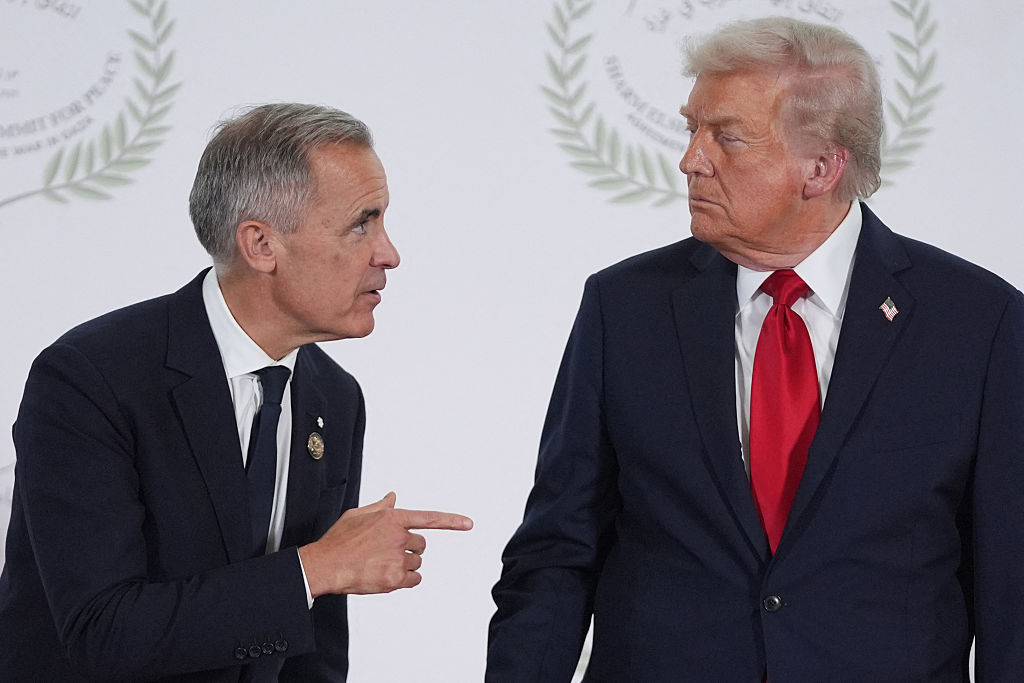
The framework goes back to a 123 agreement that Energy Secretary Chris Wright and Saudi Energy Minister Prince Abdulaziz bin Salman signed on July 22, capping more than a decade of on-and-off talks that repeatedly stalled over Riyadh's refusal to give up enrichment as a condition of U.S. cooperation. The pact, named for the section of the Atomic Energy Act that governs U.S. nuclear exports, opens the door for American firms to build reactors in the kingdom and hands Riyadh something it has wanted for years: a real shot at enriching its own uranium.
Under the terms reported at signing, Washington and Riyadh have two years to study whether domestic enrichment makes commercial sense. Any enrichment plant built afterward would go up under a "black box" model, run by U.S. companies inside Saudi Arabia so the underlying technology never actually changes hands. It's a sharp departure from Washington's 2009 pact with the United Arab Emirates, the deal nonproliferation advocates still call the gold standard, under which Abu Dhabi permanently gave up enrichment and reprocessing altogether.
Congress Gets Its Say
The administration sent the agreement to Congress in late August, starting a 90-day review clock under the Atomic Energy Act. Lawmakers can let it take effect by doing nothing, or pass a joint resolution of disapproval to kill it, though that would need to survive a presidential veto. Two side letters attached to the deal remain classified, according to the Foundation for Defense of Democracies, which also notes that of the 51 countries with active 123 agreements, only Argentina and Brazil currently lack the Additional Protocol. Saudi Arabia would be the third.
Congressional Democrats have pushed back hard, joined by some Republicans, arguing the deal opens the door to a wider enrichment race across the Middle East. The White House, meanwhile, has tied the agreement to Saudi Arabia eventually joining the Abraham Accords and normalizing relations with Israel, a step Riyadh has so far declined to take without progress toward Palestinian statehood.
The Backdrop
For Riyadh, the deal is also part of a broader push under Vision 2030 to build out nuclear power alongside renewables and diversify an economy still tied to oil exports, with U.S. firms like Westinghouse positioned to compete for reactor contracts worth billions. The talks are unfolding against last year's war between Israel and Iran, which has hardened Gulf calculations around nuclear deterrence. Crown Prince Mohammed bin Salman has said publicly the kingdom would pursue a weapon of its own if Iran ever built one. Iran, for its part, operated under the Additional Protocol from 2016 to 2021 under the nuclear deal that collapsed after the U.S. withdrew in 2018, a history nonproliferation groups keep pointing to as they push for tougher terms on Riyadh.
For now, the deal sits in a kind of holding pattern. Congress's review runs deep into the fall. The bilateral safeguards text is still being finalized in Vienna. And whether the arrangement Grossi described Monday ends up satisfying skeptics on Capitol Hill, or just gives them a new set of details to pick apart, is still an open question.
















































































.png?branch=production)





































































.png?branch=production)