Authored by Mary Gilleece via The Daily Sceptic,
Bunking off school used to be called truancy, but now 'Emotional Based School Avoidance', or EBSA, has joined the ever-growing list of supposed mental health conditions afflicting the nation's youth...
What used to be known as 'truancy' has had a smart rebrand to EBSA. Pronounced ebbsah, EBSA stands for Emotional Based School Avoidance. It is the latest woolly mental health acronym to proliferate amongst education-dodgers and those seeking to profit from them.
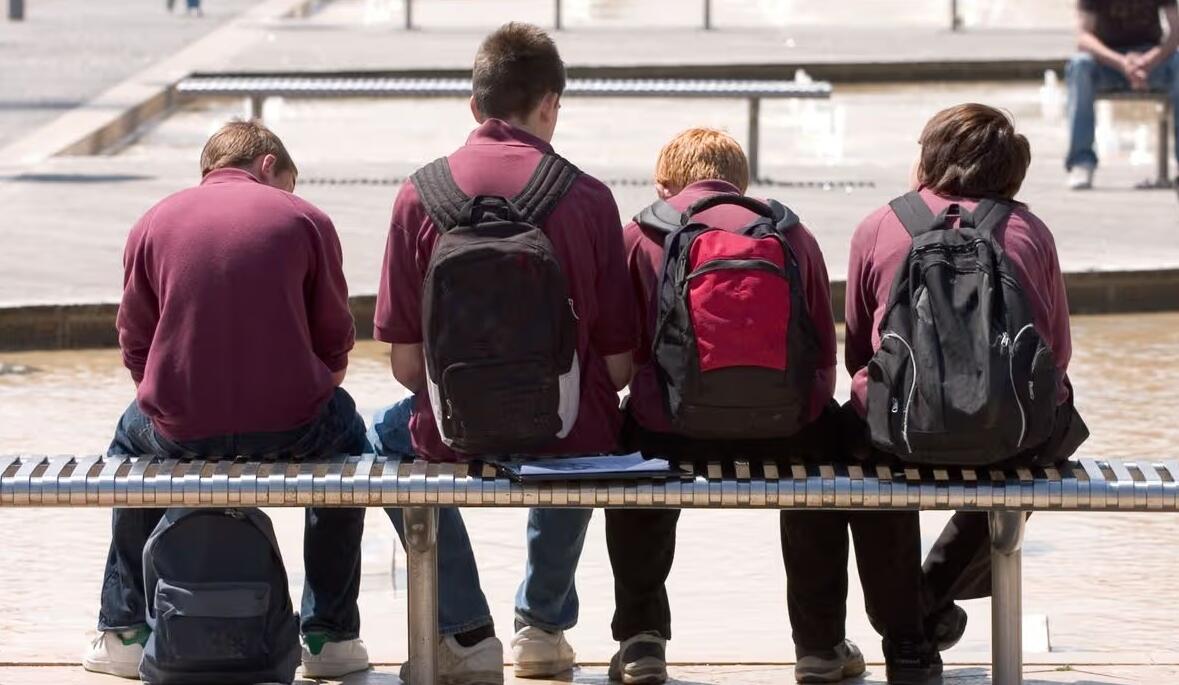
As nearly nine million children return to school in September there are over 200,000 children who remain at home, generally in their bedrooms scrolling on their phone or gaming. In 2025, 2.12% of pupils were severely absent, missing 50% or more of school. It's a troubling figure that continues to climb.
What was introduced as a term by West Sussex Educational Psychology Service (WSEPS) in 2018, has mushroomed across the education and mental health sectors. WSEPS defined Emotionally Based School Avoidance (EBSA) as: "A broad umbrella term used to describe a group of children and young people who have severe difficulty in attending school due to emotional factors, often resulting in prolonged absences from school."
Professionals, GPs, parents and social workers now authoritatively state that so-and-so 'has EBSA' even though it is not an officially diagnosable medical condition. Though it does not appear in any medically approved diagnostic manual, EBSA has somehow gained the imprimatur of respectability.
Parents of school-avoidant children have enthusiastically embraced this new 'condition'. Google searches for Emotional Based School Avoidance have increased by a breakout 5,000% in the past five years. The BBC has a parenting tips page dealing with the issue.
The theory around the pseudo-diagnosis of EBSA is that a child is anxious and upset about going to school; attending school is detrimental to his or her mental health; therefore he or she does not attend.
The local authority, however, is still legally obliged to provide education for that child. A wrap-around service of Alternative Provision, Non-School Education Providers or home tutors is arranged. The majority of Alternative Provision providers servicing the needs of so-called EBSA are privately owned, and their employment by county councils has escalated sharply, costing councils billions of pounds.
I work for one such operation. However, the figures for such children attending even these gentle alternatives are even worse than school attendance. Official figures report that overall absence rose in Alternative Provision to 41.35%, up from 40.94% in autumn 2024-25, with both persistent and severe absence continuing to climb.
This tallies with my experience. Every morning I will look at my timetable and see I am set to visit three children that day, but invariably I will receive such messages from parents as: "No session today, she's feeling overwhelmed." "He's still sleeping so won't be awake for session." "Not feeling it today."
The tragedy about the whole non-medical confection around EBSA is that there are indeed a great number of children who are anxious and do not enjoy going to school. They generally have a collection of conditions around them: ADHD (attention deficit and hyperactive disorder), PDA (pathological demand avoidance), ASD (autism spectrum disorder), anxiety and of course EBSA. The children that I work with live very narrow, limited lives within the terrifying space of the internet and their own minds. Their suffering is real even if the description of it is not.
The EBSA enthusiasts have it the wrong way round. The way to improve mental health is to attend rather than avoid school.
A widely ignored study conducted by Loughborough University and the Office for National Statistics revealed that absence from school causes deteriorating mental health. Based on a sample of 1.1 million children, the study reports:
The probability of presenting at hospital with mental health issues more than doubles (increases from 1.82% to 3.77%) when absences increase from 0% to 20%, and nearly triples (increases to 5.27%) at 30% absence.
Rather than saddling children with yet more spurious medical terms, it would be refreshing if educators, GPs, teachers, social workers and parents addressed the real issues that are enabling over 200,000 children to avoid school. Significantly: lack of sleep caused by phones and gaming kit in bedrooms, and insufficient exercise and nourishing food. Most importantly: lack of meaningful connections with real-life human beings. In other words: friends. These can be found at school.
























































.jpg?branch=production)






























































































































































































































































.png?branch=production)