Brussels appears increasingly aligned with the Trump administration's view that securing reliable, conflict-free supplies of critical materials is important for the incoming rearmament supercycle. Continued reliance on China exposes Western defense manufacturers to export restrictions that have already disrupted supply chains and could delay deliveries.
Reuters cites internal EU documents dated June 2026 that identified Vietnam as a potential source of critical materials outside China.
"Considering Europe's need to rearm and de-risk as fast as possible, the EU cannot afford ignoring Vietnam as a potential supplier of critical raw materials considering its abundant reserves in rare earth and tungsten in particular," the document stated which was prepared by the EU delegation in Hanoi.
The push comes as Chinese export restrictions collide with the West's rearmament supercycle next year, exposing alarming vulnerabilities in the supply chains needed to manufacture missiles, ammunition, armored vehicles, one-way attack drones, interceptors, sensors, and other military equipment.
The West is quickly learning that bigger and bigger defense budgets alone cannot solve the critical material shortage and there is high urgency in securing alternative supply chains.
Vietnam holds substantial deposits of tungsten, rare earths, and other critical minerals, but its exports to Europe have largely been limited to tungsten and antimony, both of which are used to manufacture weapons.
The document noted that China's restrictions on critical material exports last year disrupted European supply chains, strengthening the case for exploring alternative sources.
It called for stronger relations with Vietnam to "add an alternative to China," especially after Beijing's export restrictions last year "disrupted European supply chains."
"The European Commission is currently assessing the potential for concrete cooperation with Vietnam in the critical raw materials sector," a spokesperson for the EU executive arm told the outlet.
Adrien Rabier, Bernstein's equity analyst covering European aerospace and defense, outlined to clients last month that Europe's rearmament supercycle will begin next year and extend through the end of the decade.
Our reporting has pointed out that the next phase of the critical materials trade will favor miners already producing and delivering these materials to Western markets.
This comes as resource nationalism intensifies across critical minerals, metals, energy, adding to uncertainty as the world heads into a potentially volatile winter.
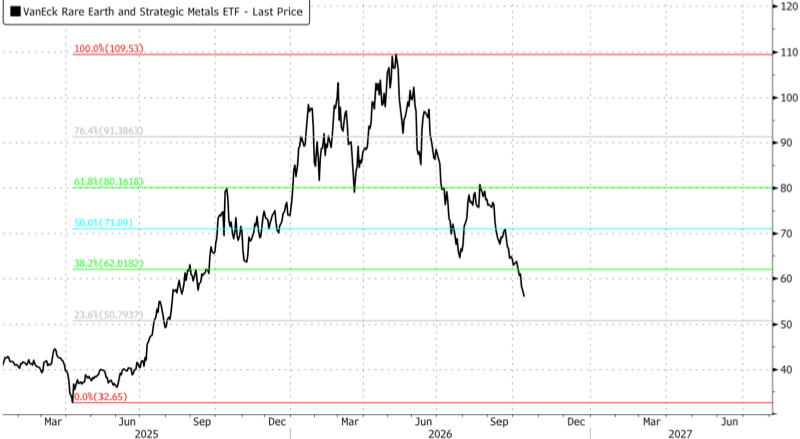
The VanEck Rare Earth and Strategic Metals ETF (REMX), which tracks global companies that produce, refine, and recycle critical minerals, peaked in May and lost nearly half its value by early fall.
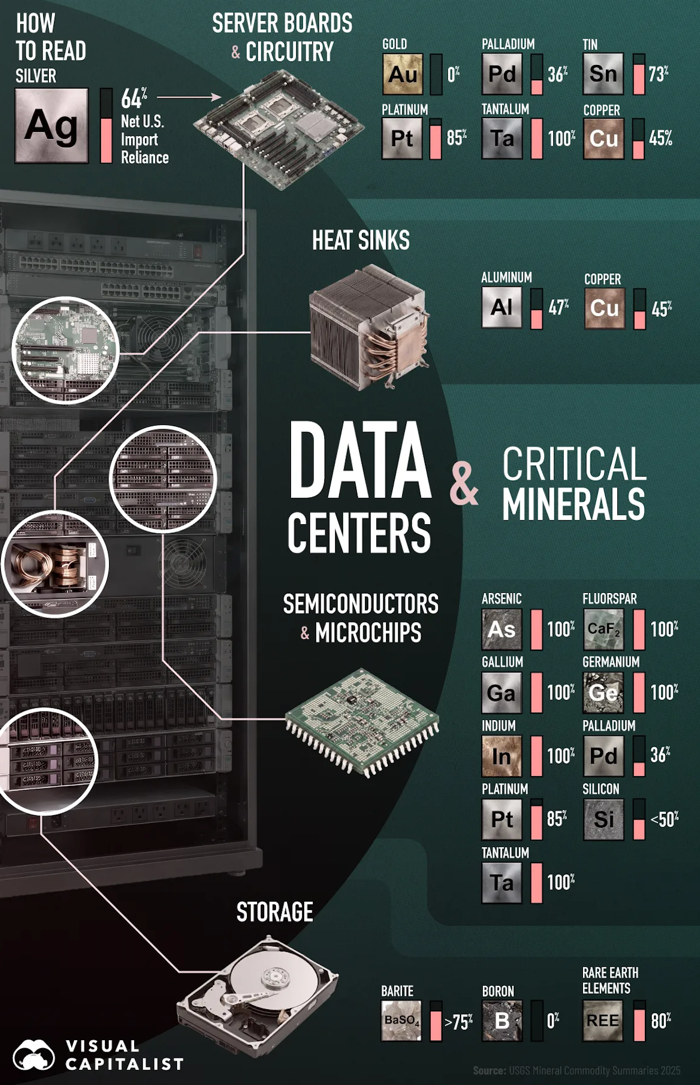
REMX's decline appears to be a retracement of the rally in 2025 and early 2026 that followed China's export restrictions. Once the space bottoms, traders will likely focus on miners that can reliably deliver conflict-free materials to the West. These materials are critical not only to the rearmament cycle but also to AI data centers, reindustrialization, electrification, and the broader modern economy.


.jpg?branch=production)