Authored by Jill McLaughlin via The Epoch Times (emphasis ours),
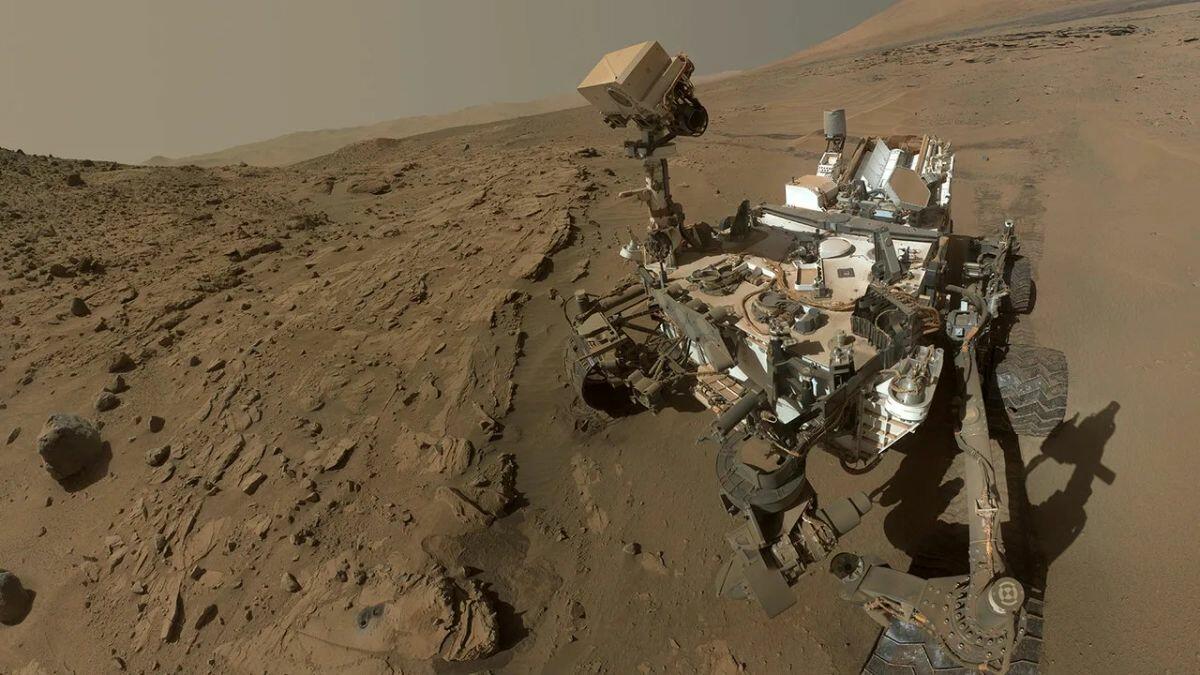
NASA’s Curiosity Rover has discovered evidence on Mars that suggests underground water once existed in a region of the planet later than scientists first believed, the agency reported March 15.
“Our findings show that Mars didn’t simply go from wet to dry,” said Dimitra Atri, group leader of the Mars Research Group at New York University. “Even after its lakes and rivers disappeared, small amounts of water continued to move underground, creating protected environments that could have supported microscopic life.”
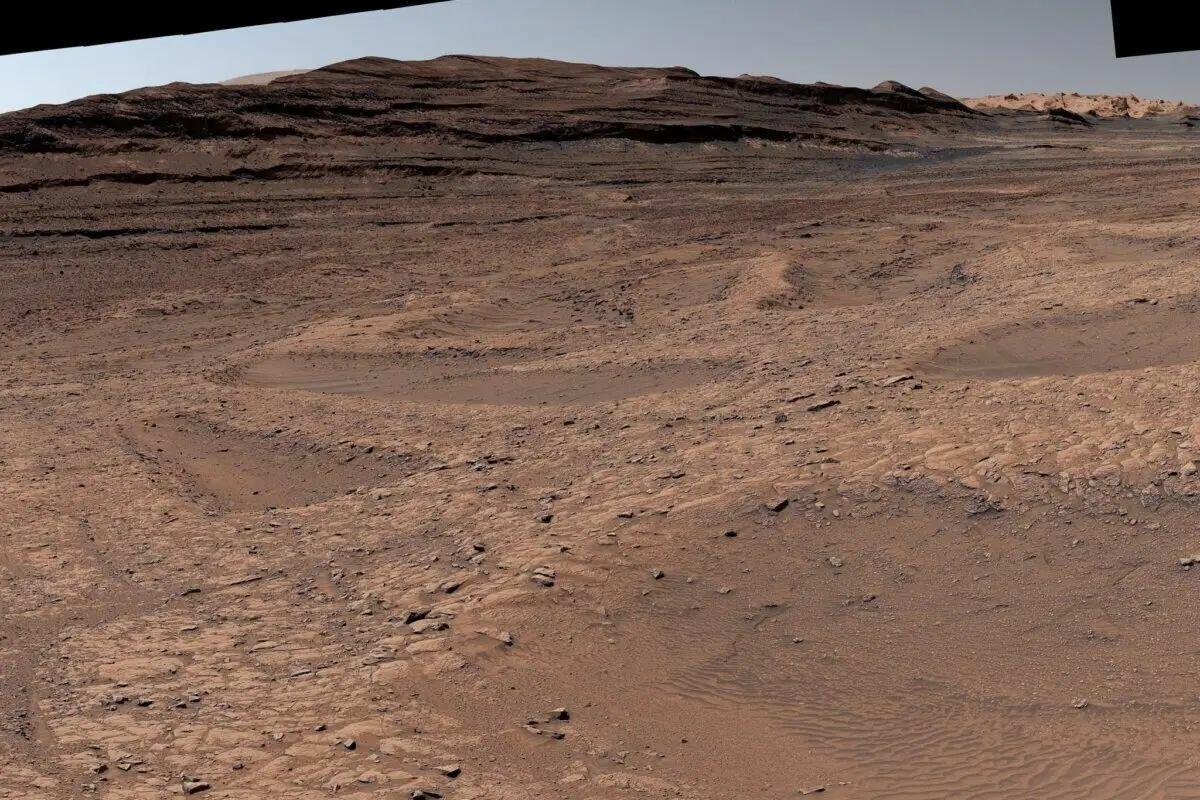
Curiosity, an SUV-size vehicle weighing about one ton, spent six months investigating an area filled with geological formations known as boxwork, which are low-crisscrossing ridges about three to six feet tall.
The features look like giant spiderweb patters when viewed from space, according to NASA.
“Seeing boxwork this far up the mountain suggests the groundwater table had to be pretty high,” said Tina Seeger of Rice University in Houston, one of the mission scientists. “And that means the water needed for sustaining life could have lasted much longer than we thought looking from orbit.”
Scientists say they think the boxwork formed when groundwater traveled through cracks in the bedrock, leaving behind minerals.
The minerals hardened and reinforced the fractures over time, forming ridges, NASA said, and the surrounding rock was worn away by wind, leaving behind the web-like structures.
Until now, scientists have only had images taken from space of the formations. The same boxwork features exist on Earth, but are much smaller. The ones on Mars are larger and more widespread.
Engineers steer the rover remotely from NASA’s Jet Propulsion Laboratory in Southern California, guiding it over ridges that are barely wider than the vehicle.
“It almost feels like a highway we can drive on. But then we have to go down into the hollows, where you need to be mindful of Curiosity’s wheels slipping or having trouble turning in the sand,” said operation systems engineer Ashley Stroupe at NASA Jet Propulsion Laboratory. “There’s always a solution. It just takes trying different paths.”
NASA said researchers were also trying to understand how the network of ridges formed on a 3-mile-tall mountain that Curiosity is climbing.
The terrain increasingly shows signs that water gradually disappeared over time, although there were occasional periods when the rivers and lakes briefly returned, according to the agency.
The rover is serving as a mobile science lab, collecting and analyzing rock samples with a drill mounted on its robotic arm. The drill turns rock into powder, which is then delivered to instruments for more study, according to NASA.
Using X-rays and a high-temperature oven last year, scientists identified clay minerals in the ridge sample and carbonate minerals in the hollow that offered more clues about how the features formed.
The rover is expected to leave the boxwork region sometime this month. The area is part of a layer that contains sulfate minerals, which formed as water gradually disappeared from the planet.
































































































































































































































































![The 20th Annual ‘Women Of Power’ Summit Finishes Strong With Powerhouse Programming [PICS]](https://blackenterprise-prod.b-cdn.net/wp-content/blogs.dir/1/files/2026/03/IMG_2881-1024x688.jpeg)