Authored by Chris Summers via The Epoch Times (emphasis ours),
The U.N. General Assembly on March 25 adopted a resolution declaring the trafficking of enslaved Africans “the gravest crime against humanity” and calling for reparations.
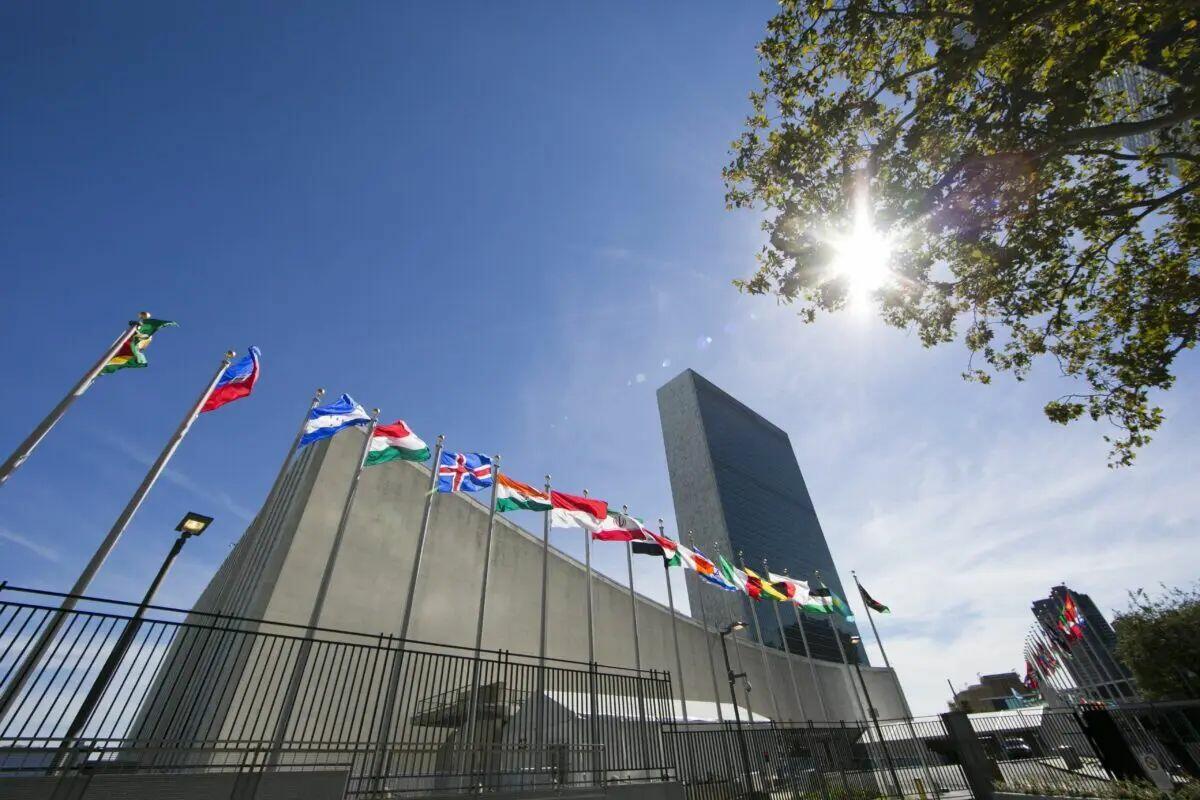
The vote at U.N. headquarters in New York City saw 123 countries voting in favor of the resolution, with only the United States, Israel, and Argentina voting against it.
The UK, France, Spain, Portugal, and the Netherlands—who were all heavily involved in the slave trade during the 17th, 18th, and part of the 19th centuries—were among the 52 countries that abstained.
General Assembly resolutions, unlike U.N. Security Council resolutions, are not legally binding.
The resolution, put forward by Ghana, “declares the trafficking of enslaved Africans and racialized chattel enslavement of Africans as the gravest crime against humanity,” adding that claims for reparations “represent a concrete step towards remedying historical wrongs against Africans and people of African descent.”
Ghanaian President John Dramani Mahama, who helped draw up the resolution, said an estimated 13 million African men, women, and children were enslaved over several centuries.
The document says that under international law, “states bear responsibility for internationally wrongful acts and have an obligation to cease the act if it is continuing and to offer appropriate assurances and guarantees of non-repetition if the circumstances so require, and to make full reparation for the injury caused, which may take the form of restitution, compensation and satisfaction, either singly or in combination.”
Deputy U.S. Ambassador to the U.N. Dan Negrea said before the vote that the resolution’s text was “highly problematic in countless respects.” He said the United States “does not recognize a legal right to reparations for historical wrongs that were not illegal under international law at the time they occurred.”
“The United States also strongly objects to the resolution’s attempt to rank crimes against humanity in any type of hierarchy,” Negrea added. “The assertion that some crimes against humanity are less severe than others objectively diminishes the suffering of countless victims and survivors of other atrocities throughout history.”
Negrea said the United States “must once again remind this body that the United Nations exists to maintain international peace and security” and not to “advance narrow specific interests and agendas, to establish niche International Days, or to create new costly meeting and reporting mandates.”
The British Empire was heavily involved in the slave trade. The UK passed the Abolition of the Slave Trade Act in 1807, but according to the UK Parliament, “slaves in the colonies (excluding areas ruled by the East India Company) were not freed until 1838—and only after slave—owners, rather than the slaves themselves, received compensation.”
At the time, the UK borrowed 20 million pounds ($26.7 million)—equivalent to 2.2 billion pounds ($2.94 billion) in 2026—to compensate slave owners. The debt was paid off in 2014.
James Kariuki, chargé d'affaires at the UK mission to the United Nations, said in a March 25 statement: “We have repeatedly recognised the abhorrent nature of slavery and the transatlantic slave trade, which inflicted untold harm and misery on millions of people over many decades. Its horrors were profound and its legacy continues to leave deep scars today.”
Kariuki said that the UK disagreed with “fundamental propositions of the text” and therefore could not vote in favor of it.
“The UK is firmly of the view that we must not create a hierarchy of historical atrocities,” he said. “None of the recognised sources of international law, as set out in Article 38 of the Statute of the International Court of Justice, identify a prohibition on slavery and the slave trade until the 20th century.”
All 27 members of the European Union abstained in the vote. Cypriot Deputy U.N. Ambassador Gabriella Michaelidou, speaking on behalf of the EU, said the resolution had an “unbalanced interpretation of historical events.”
‘Safeguard Against Forgetting’
Mahama, who was elected in 2024, noted that the vote was taking place on the International Day of Remembrance of the Victims of Slavery and the Transatlantic Slave Trade.
He said before the vote that the resolution “serves as a safeguard against forgetting.”
“Let it be recorded that when history beckoned, we did what was right for the memory of the millions who suffered the indignity of slavery,” he said.
U.N. Secretary-General António Guterres, who will be stepping down later this year, said he welcomed the steps some countries are taking to “apologize for their role in the evil of slavery.”
“But far bolder actions, by many more states, are needed,” Guterres said. “This includes commitments to respect African countries’ ownership of their own natural resources.”
The Associated Press contributed to this report.
* * * Top Supplements