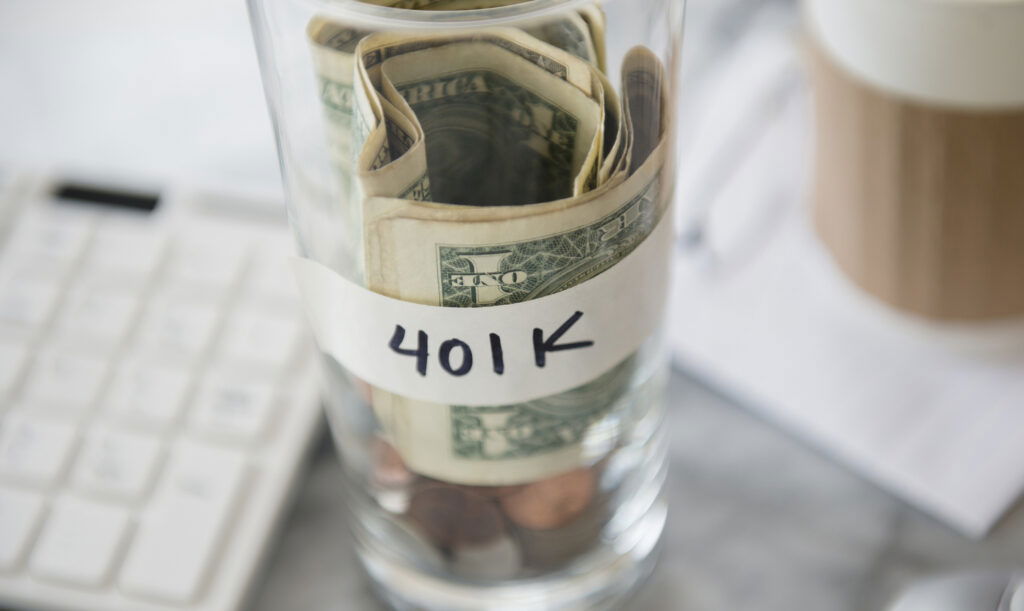
Another light on America's economic dashboard is blinking red, as money-pinched workers are cutting their 401k contribution rates. The news follows our earlier report on hardship withdrawals from the cornerstone retirement savings accounts hitting a record high. Critically, these numbers don't reflect what workers are doing right now -- amid war-driven gas price-hikes and worries about the economy.
According to new data from Dayforce's State of Retirement Savings 2026 report, in 2025, Americans trimmed their contribution rates to 401k and similar plans from 9.2% to 8.9%. While the decline was relatively modest, it was a widespread phenomenon, with more than one in four workers reducing their contributions. Employees earning between $50,000 and $150,000 were most likely to have eased back. The participation rate slipped from 78.6% in 2024 to 77.5%. The decreases come despite wider use of automatic enrollment in retirement plans, and increasingly-common auto-escalation features that ratchet up contributions each year.
"When you are struggling day to day, it's hard to focus on your long-term goals," Matt Bahl, vice president at the Financial Health Network, told CBS News. "We're really seeing the crunch for those middle-income earners — it speaks to the affordability crisis."
Dayforce cautioned that employers' concern about the trend should go beyond future retirement security, and include their workers' present-day financial stress. "[It] can influence engagement, productivity, and retention," said the company, which offers a cloud-based "Global Human Capital Management" platform. As 2025 ended, roughly half of Americans in an Allianz Life survey said they had more financial stress than they did a year ago.
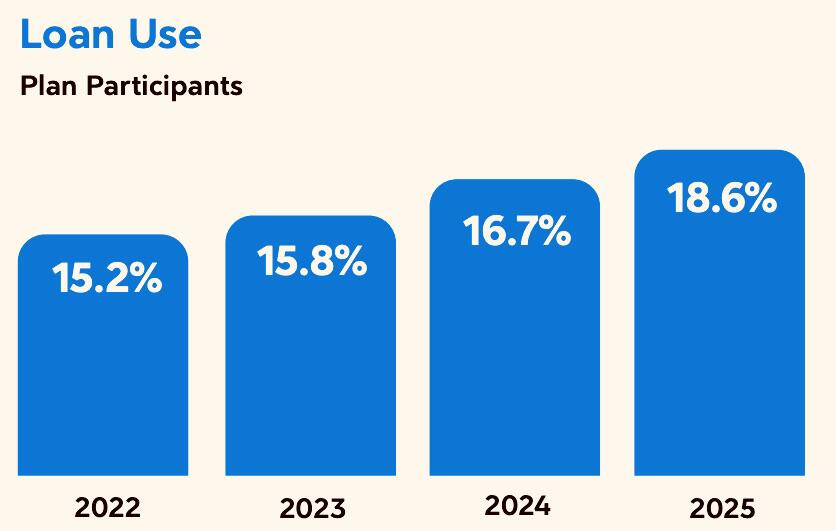
Reinforcing that picture of growing financial stress, loan use increased more than 20% since 2022. The Dayforce study didn't cover hardship withdrawals, but Vanguard's How America Saves 2025 study found that hardship withdrawal activity "increased to a new high" of 6% in 2025, up from 4.8% in 2024 and about 2% before the pandemic. In part, that trend was facilitated by a regulatory change -- in 2018, Congress nixed a requirement that participants first take a 401(k) loan before they could take a hardship withdrawal.
Men's 2025 savings rate topped women's -- 9.6% to 8.2% -- though that gap was wider a few years ago. Asians had the top savings rate (10.4%), with whites close behind (10.1%), followed by blacks (6.0%) and then Latinos (4.7%). Conversely, 28.7% of blacks and Latinos collectively had an active loan from their retirement accounts, compared to 15.9% of whites. No loan data was given for Asians.
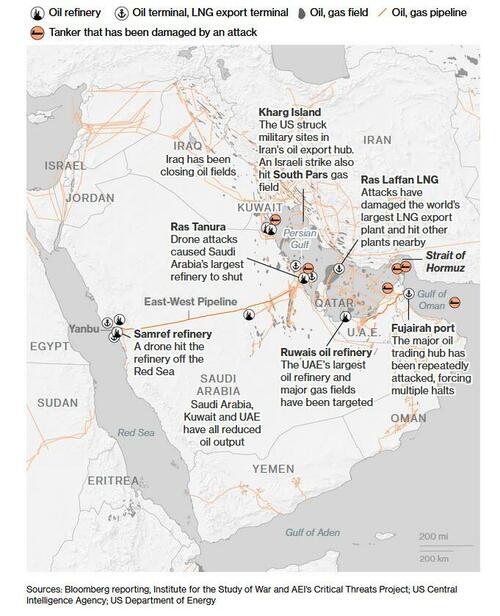
Watch for all these indicators to keep trending down: Cost-of-living effects of the US-Israeli war on Iran are poised to grow stronger as the global oil shockwave steadily moves closer to America's shores.








.png?branch=production&format=jpg&width=1024)