
Authored by Guy Birchall via The Epoch Times,
A federal judge ruled on May 7 that the Department of Government Efficiency’s (DOGE’s) termination of hundreds of humanities grants last year was unconstitutional and involved “blatant” discrimination.
In April 2025, the Trump administration axed more than 1,400 grants, amounting to more than $100 million in congressionally appropriated funds awarded to scholars, writers, research institutions, and other humanities organizations.
The move was part of a whirlwind cost-cutting drive that tech billionaire Elon Musk was leading at DOGE as a “special government employee”—a role that is term-limited to 130 days. Musk departed that role after completing his term in May 2025.
However, Bill Clinton-appointed District Judge Colleen McMahon, ruling at the U.S. District Court for the Southern District of New York, said that the administration “engaged in blatant viewpoint discrimination,” ruling in consolidated cases brought by the American Council of Learned Societies, the Authors Guild, and others.
McMahon said the terminations violated the First Amendment right to free speech and the Fifth Amendment, which confers equal protection.
She also ruled that DOGE did not have the legal authority to terminate the grants.
“What mattered to DOGE was not whether a grant lacked scholarly merit, failed to comply with its terms, or fell outside NEH’s [National Endowment for the Humanities] statutory purposes. What mattered was that the grant concerned a ’minority group,'” she ruled.
“DOGE swept in race and ethnicity – including grants concerning Black, Asian, Latino, and Indigenous communities – as well as national origin and immigration status; religion and religious identity (including Jewish, Christian, and Muslim subjects); sex; and sexual orientation, as criteria for grant termination.”
McMahon also said that DOGE staffers using ChatGPT to establish the rationale behind axing some grants would not absolve the government of responsibility for its decisions.
“The government cannot escape liability for DOGE’s work by scapegoating ChatGPT,” she ruled.
Neither DOGE nor the White House has yet responded to the ruling. The Epoch Times has contacted both for comment.
According to DOGE’s website, the department has saved an estimated $215 billion in taxpayers’ money since it was established in January 2025.
That figure amounts to around $1,335.40 per taxpayer, according to DOGE.
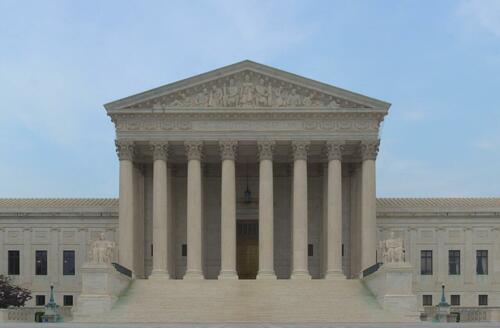
The department’s work has been met with other litigation since it began, with the Trump administration in March asking the Supreme Court for a second time to halt lower courts’ attempts to access information about DOGE’s inner workings.
The Supreme Court intervened in the case last year, ruling that lower courts’ orders for the government to turn over information about the department’s activities were overbroad. An appeals court has since asked for less information, but the government told the Supreme Court on March 23 that the requests were still intruding too much on executive branch powers.
“The court of appeals has continued to approve intrusive discovery against a presidential advisory body without adequate consideration for the separation of powers, the FOIA [Freedom of Information Act] statute, and this Court’s previous order,” the government’s filing stated.
The Citizens for Responsibility and Ethics in Washington sued DOGE last year after its FOIA requests were not honored.
The government has argued that DOGE is an advisory arm of the executive branch—not an agency—and is not required to submit to FOIA inquiries. But a district court in Washington ruled differently and ordered DOGE to comply with those inquiries.
The Supreme Court has yet to rule on the administration’s latest request.














































































































































































































































































.png?branch=production&format=jpg&width=1024)



















































































































































































































































































































































































































.jpg?branch=production&format=jpg&width=1024)