2026-05-23T11:59:59Z
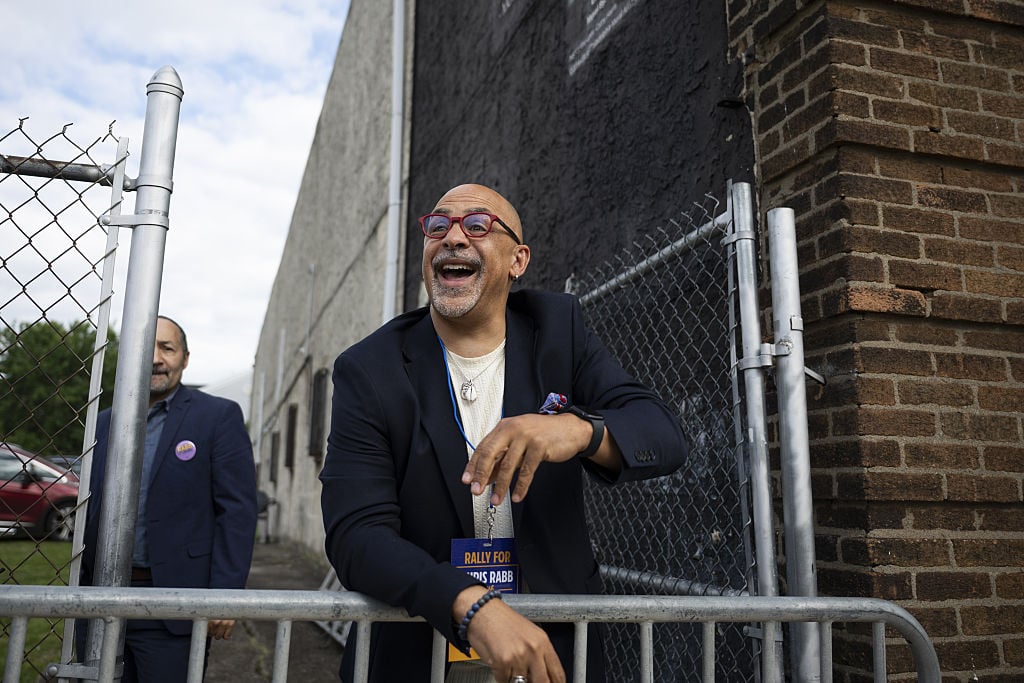
HARRISBURG, Pa. (AP) — It looked like progressive Chris Rabb had a mountain to climb to win the Democratic nomination for a congressional district in Philadelphia.
The mayor and the city’s Democratic Party had endorsed another candidate in this week’s primary. So had members of Pennsylvania’s delegation in the U.S. House. One Rabb rival was backed by millions of dollars. A second benefited from a get-out-the-vote operation run by the influential local building trades unions.
But Rabb finished 15 percentage points ahead of his closest competitor in Tuesday’s election, and the state representative is likely on his way to Washington because no Republican sought the GOP nomination.
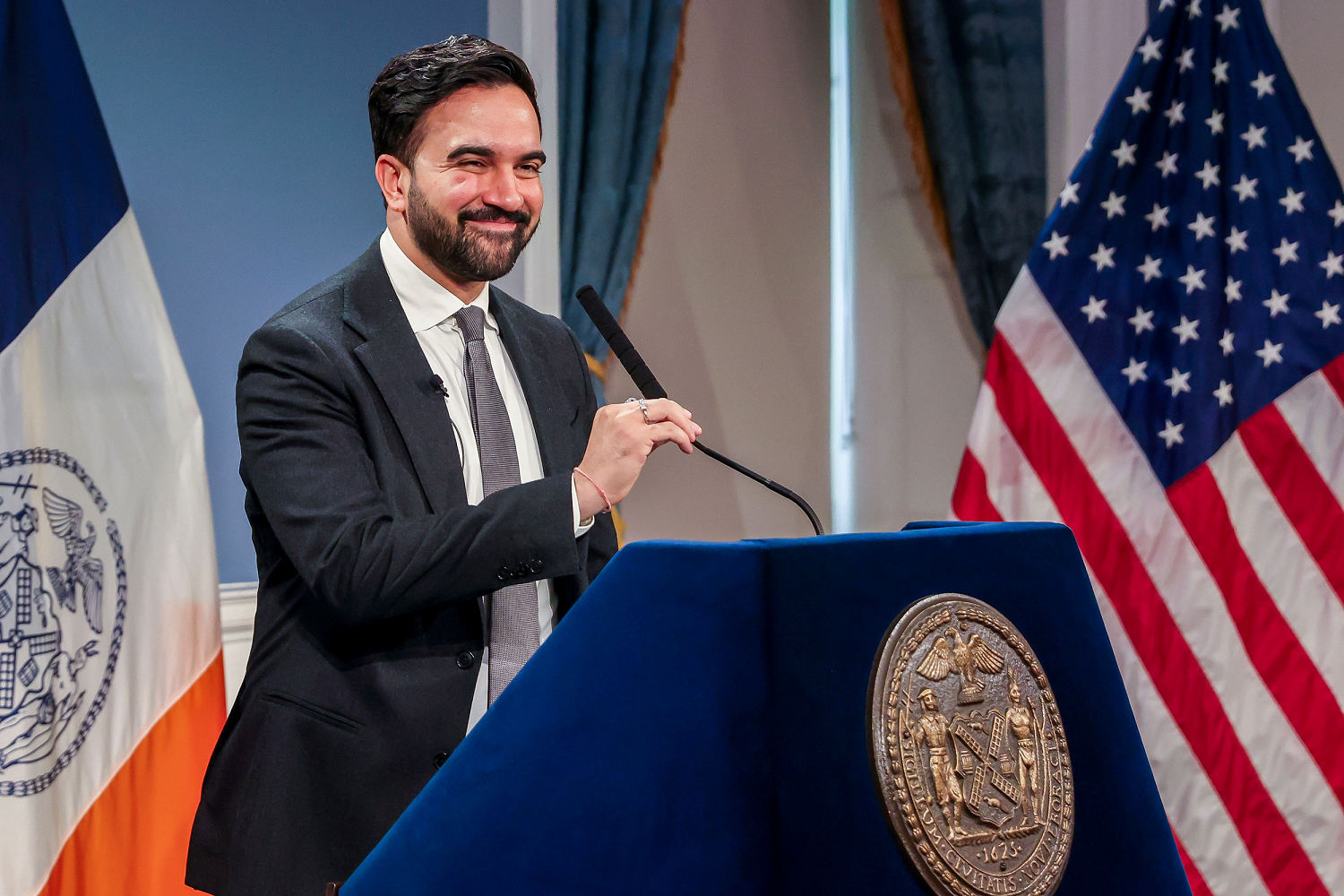
Rabb was propelled by a constellation of progressive groups, charting a path to victory partly by assailing his own party as listening more to donors than voters. He credited a grassroots movement inspired by New York City Mayor Zohran Mamdani, alarmed by Republican President Donald Trump and hungry for a government responsive to their needs.
“That was at the heart of why I was running and that is what I built my campaign around and that, I believe, is a chord we struck in this electorate that showed up and came out like gangbusters,” Rabb said in an interview with The Associated Press.
The progressive left counts Rabb’s success as one of its biggest victories of the year and the latest warning sign that Democratic voters see the party’s leadership as weak and feckless in countering Trump. Progressives are also running for House seats in New York, California and Michigan where they are challenging Democratic incumbents or aiming to take on vulnerable Republicans.
Rabb, 55, is a self-described Democratic socialist and “proud troublemaker” who reliably supported the most progressive causes in the state House during his five terms. His backers said voters sent an important signal this week.
“They want someone who knows what they stand for and is ready to fight, whether it’s fighting Donald Trump now or fighting an economy and political system rigged for billionaires in years ahead,” said Adam Green, a co-founder of the Progressive Change Campaign Committee.
Progressives are finding their footing in midterms
Traction by progressives in midterm races has stoked concerns from moderates that far-left candidates will alienate middle-of-the-road voters and squander a politically advantageous year to unseat Republicans, retake control of Congress and block Trump’s agenda during his last two years in office.
Mike Mikus, a Pittsburgh-based Democratic strategist, said progressives could be a problem down the road for the Democratic Party, but not this year.
“Regardless of who we nominate, gas prices are still too high, grocery prices are too high and people generally think the economy is not in a good place,” Mikus said. “And voters will vote for change.”
Perhaps Rabb’s biggest supporter was the Working Families Party, which says the Democratic and Republican establishments have sold out to powerful interests. The organization has backed several members in Congress, and Analilia Mejía became the newest addition after winning a special election in New Jersey on April 16.
Rabb does not know what he might be able to expect in Washington. “Will we have a razor-thin majority? Will we be in a razor-thin minority?”
He sees Congress as a place where most are not willing to take bold steps because of money in politics. In his victory speech, Rabb showed the fire that his progressive backers say helped win over voters.
“I have been critiqued along this campaign for being too radical, too bold,” Rabb told the crowd. “They ain’t seen nothing yet.”
Rabb’s positions on many issues raised during the campaign were not dramatically different from his rivals’, such as supporting Trump’s impeachment, abolishing U.S. Immigration and Customs Enforcement, imposing a moratorium on data centers or championing “Medicare for All.”
He was distinct in stressing his support for government-run grocery stores — to wipe out “food deserts” — and an expansive minimum wage law that eliminates a lower tipped minimum wage and covers independent contractors such as gig workers.
Perhaps most notably, Rabb was a strident critic of establishment politics, including his own party’s.
He said people are sick of insider politicians and big-donor politics. That leads to lackluster voter turnout, even while Trump is president and there is strong antipathy against “MAGA extremism and corporate greed,” he said, referring to Trump’s “Make America Great Again” movement.
“We can learn lessons from this victory because, if establishment politics was as effective and productive as people would have us think, then I would have been blown out of the water,” Rabb said.
Campaign spending and surrogates
Sharif Street, a state senator and former state party chair, finished second on Tuesday. U.S. Sen. Cory Booker of New Jersey and Philadelphia Mayor Cherelle Parker campaigned for him and building trades unions kicked in more than $600,000.
Dr. Ala Stanford was third, getting support from the retiring incumbent, Dwight Evans, and $3.5 million in spending by 314 Action, a left-leaning political action committee aimed at electing scientists to Congress.
The state’s most prominent Democrat, Gov. Josh Shapiro, did not endorse a candidate. He did call after the election to congratulate Rabb.
Rabb was boosted by at least $1.8 million in spending help by allied progressive groups, according to federal campaign disclosures. U.S. Rep. Alexandria Ocasio-Cortez, D-N.Y., campaigned for him four days before the primary date.
Backers celebrated his triumph over the city party’s “machine.”
“The fact that Chris was able to win in machine territory is significant and should send a shock wave to the Democratic establishment that base voters are upset and want transformational change,” said Joseph Geevarghese, executive director of Our Revolution, which was founded by U.S. Sen. Bernie Sanders, I-Vt.
While progressive groups are making deeper inroads into Philadelphia, some Democrats pointed out that Rabb captured just 45% of the vote, meaning that perhaps a candidate with unified establishment backing could have prevailed. Others suggested Rabb was helped by a low-turnout election in which fewer than one-third of registered Democrats voted.
“Momentum, the vibes, how people feel about a candidate are going to make a difference,” said Mustafa Rashed, a Democratic political consultant in Philadelphia.
Rabb said he almost didn’t see the race to its conclusion and considered quitting after reporting his campaign treasurer for stealing money.
He felt such a sense of betrayal, combined with the stress of being outspent by his rivals, that he worried it would derail his candidacy.
“There was a lot of internal talk about what is the path forward for me,” Rabb said. “I had to dig down and just reaffirm that I’m walking in my purpose and this is exactly what I’m supposed to be doing, irrespective of the adversities.”
___
Follow Marc Levy at http://twitter.com/timelywriter






































.jpg?branch=production&format=jpg&width=1024)




















.png?branch=production&format=jpg&width=1024)

































































































































































































.jpg?branch=production&format=jpg&width=1024)


















































































.jpg?branch=production&format=jpg&width=1024)












































.jpg?branch=production&format=jpg&width=1024)