Our warning at the start of the year, well before the U.S.-Iran conflict erupted, rested on one very simple theme that much of Wall Street missed, perhaps because analysts were still wearing their 'green' glasses and focusing on the wrong crises or actually non-existent crises.
The more immediate threat to data centers was never about climate change or soaking up the world's resources. It was the very real threat of a data center being hit by a low-cost Shahed-style one-way attack drone, exposing the missing layer in cheap, scalable counter-drone defenses at nearly every data center worldwide.
Even we were surprised by how quickly that theme was validated. One month later, Iranian drone swarms targeted data centers across the Gulf, taking some hubs offline and forcing Wall Street, hyperscalers, insurers, and the defense community to confront an uncomfortable new reality.
Expanding on this theme, about three months into the ongoing U.S.-Iran war, counter-drone company Allen Control Systems CEO Steven Simoni warned on X that drones are in the very early stages of reshaping modern warfare and physical security, with the Russia-Ukraine war serving as the warning shot.
Simoni pointed out that in just four years, drones have become responsible for roughly 80% of casualties in that war, surpassing traditional battlefield systems such as artillery, aircraft, helicopters, rockets, and landmines. The result is that low-cost drones are becoming the dominant weapons platform on the modern battlefield.
"But an acute threat, because instead of the effect of these new fires being widespread and chaotic (which actually gives defenders a chance), they will be ultra-targeted and precise. Think more like, specific structural points of infrastructure from skyscrapers to nuclear power plants and particular faces from leaders to dissidents being recognized and targeted," he said.
Simoni added, "Another example: think about the capex that is going to be just datacenter buildout across the world over the next ten years. Imagine what kind of insurance (and the insurer's) reinsurance is involved in protecting all of that compute, all of that data, and all of those people. It's enormous."
"Drones, among other things, will be part of the threat model facing their physical security, their power infrastructure, and their personnel. All of that investment will be at risk, in part, from drones," he continued, adding, "The problem is so enormous, it's bigger than you think, and it's going to get more global and more acute."
Which way, Western man? pic.twitter.com/PwkL4xT6bF
— Quantum Daddy (@LegalPrimes) May 13, 2026
He cited a video from the Naval Podcast and told his followers, "Everyone should watch this."
Naval Podcast states in the video that drone warfare will fundamentally change the structure of violence in society - and therefore how militaries and entire states are architected. It said the historical parallels are similar to the rise of the modern state, in which a rifle enabled a former peasant to take down a feudal knight on the battlefield.
New:
— Naval Podcast (@navalpodcast) May 12, 2026
The Logic of Violence
A podcast film pic.twitter.com/HsRZqFeEUt
Being one step ahead, we see a boom in the counter drone defense space - not with million-dollar interceptor missiles - but cheap, scalable solutions:
-
Micro AI Sentry Guns May Be Next Layer Of Defense For Data Centers Against Kamikaze Drones
-
U.S. Deploys Ukrainian Acoustic Sensors, Interceptor Drones At Prince Sultan Air Base
And just wait until micro jet engines become standard on suicide drones ...
Jet-powered drones are becoming a new phase of modern warfare.
— PBS GROUP (@PBS_GRP) May 21, 2026
The article below highlights the growing Czech-Ukrainian partnership in the development and production of compact turbojet engines for next-generation UAV and defense platforms, with PBS expanding its manufacturing… pic.twitter.com/lWly7lhw8f
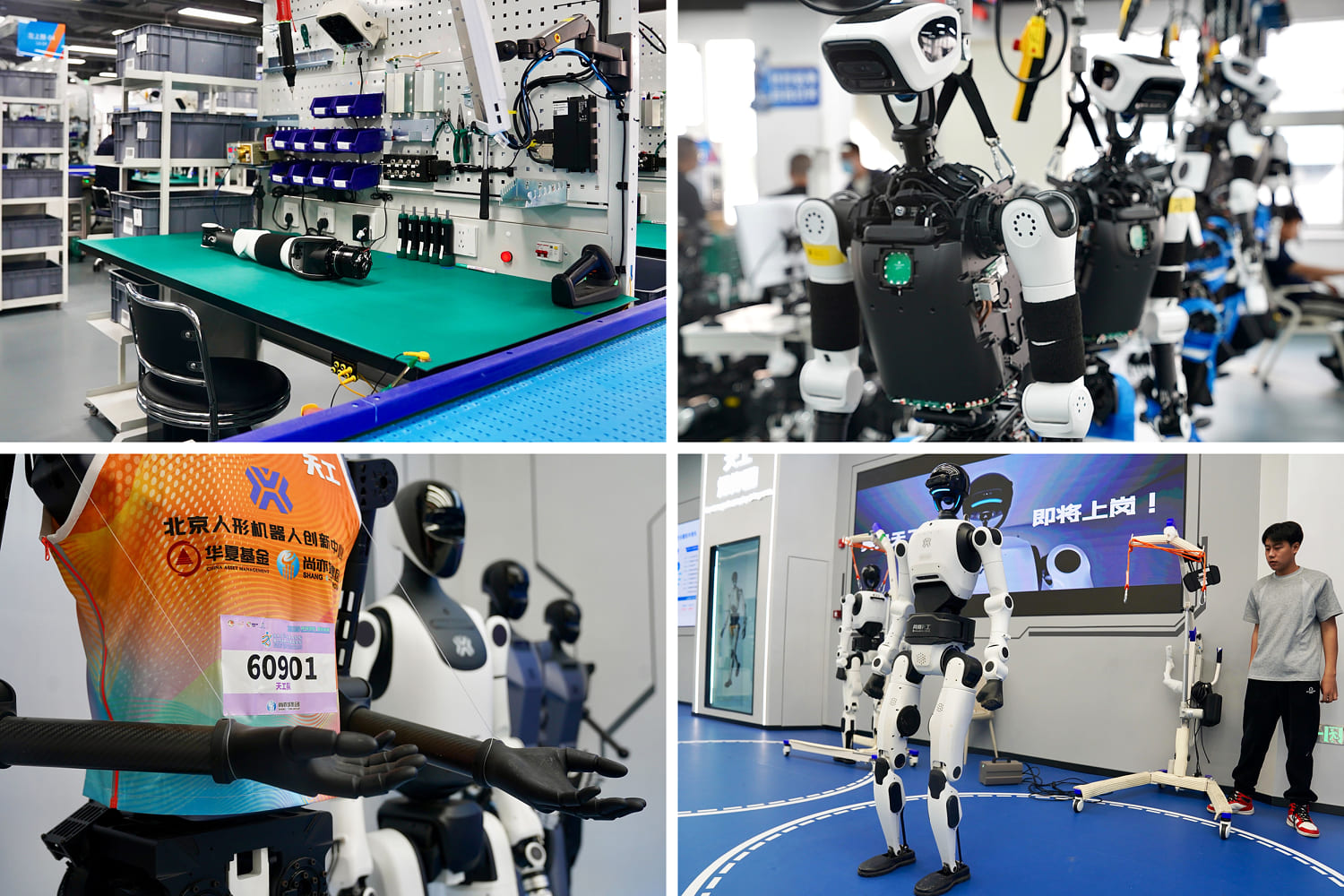
Welcome to 2030s warfare. The world only gets more dangerous from here as the innovation curve for ground robots, autonomous drone swarms, AI kill chains, and eventually humanoid soldiers accelerates.































































.jpg?branch=production&format=jpg&width=1024)
































.png?branch=production&format=jpg&width=1024)






















































































































































































































































































.jpg?branch=production&format=jpg&width=1024)






















































































































.jpg?branch=production&format=jpg&width=1024)































































.jpg?branch=production&format=jpg&width=1024)