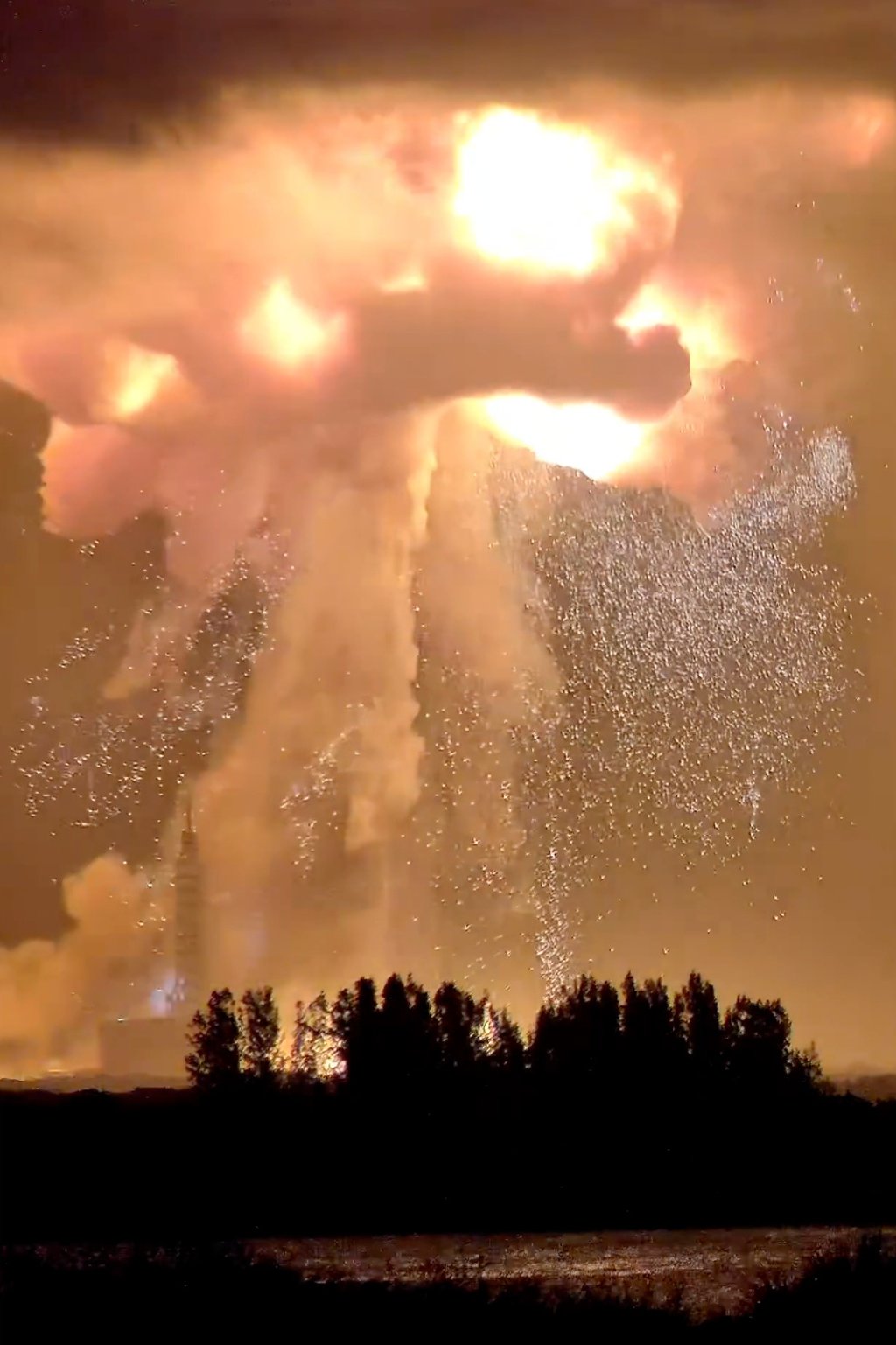
Blue Origin’s New Glenn rocket exploded in a massive fireball while undergoing a static-fire test on a Florida launchpad Thursday evening, dealing a major setback to the Jeff Bezos-backed firm in its efforts to challenge a dominant SpaceX.
The firm was preparing the vehicle for its fourth launch, which was slated to deploy a batch of satellites for Amazon.com Inc.’s Leo, a rival satellite network to SpaceX’s Starlink. None of the satellites were on the rocket when it exploded, a spokesperson for Amazon said.
Blue Origin's New Glenn just blew up at LC-36 while attempting to Static Fire ahead of NG-4.https://t.co/tANS0dWyIH pic.twitter.com/PztxFoBqIw
— NSF - NASASpaceflight.com (@NASASpaceflight) May 29, 2026
Blue Origin said the rocket experienced an “anomaly” during the test. All personnel have been accounted for and are safe, the company said.
We experienced an anomaly during today's hotfire test. All personnel have been accounted for. We will provide updates as we learn more.
— Blue Origin (@blueorigin) May 29, 2026
Commenting on the explosion, which raised the valuation of SpaceX by tens of billions as one of its biggest competitors just saw its launch vehicle end up in a massive fireball, Elon said the event was "most unfortunate. Rockets are hard."
Most unfortunate. Rockets are hard.
— Elon Musk (@elonmusk) May 29, 2026
New Glenn, which is key to Blue Origin’s plans for space exploration, is years behind schedule and has faced longer-than-expected waiting periods between flights. The explosion is the latest blow to its reputation as a reliable alternative to SpaceX’s Falcon 9.
The rocket is set to serve a key role in NASA’s Artemis program, which aims to send humans back to the moon. It is also one of an elite group of vehicles that is supposed to deliver the most critical US national security satellites for the Pentagon.
All personnel are accounted for and safe. It’s too early to know the root cause but we’re already working to find it. Very rough day, but we’ll rebuild whatever needs rebuilding and get back to flying. It’s worth it.
— Jeff Bezos (@JeffBezos) May 29, 2026
According to Bloomberg, the Federal Aviation Administration, which licenses commercial rocket launches, said it is aware of the failure and there was no impact to air traffic. The test was not within the scope of FAA licensed activities, the agency said, referring further questions to the company.
This angle is even crazier https://t.co/bDUuiafnTg pic.twitter.com/LuLG3frNw2
— Sawyer Merritt (@SawyerMerritt) May 29, 2026
Blue Origin recently launched New Glenn on its third flight in April. The rocket successfully took off and the vehicle’s booster landed on a company barge at sea. However, the upper portion of the rocket experienced an issue in space and didn’t achieve enough thrust, failing to put the satellite it was carrying for AST SpaceMobile Inc. into the proper orbit. Ultimately, the satellite fell back to Earth and burned up in the atmosphere.
The FAA had recently approved Blue Origin’s investigative report that analyzed the issue on the third flight, and the company said corrective measures had been implemented.
Insane footage filmed from a nearby restaurant shows tonight’s explosion of Blue Origin’s New Glenn at Cape Canaveral Launch Complex 36 (LC-36). pic.twitter.com/2jahDKHKhq
— OSINTdefender (@sentdefender) May 29, 2026







































.png?branch=production&format=jpg&width=1024)











































.jpg?branch=production&format=jpg&width=1024)
.jpg?branch=production&format=jpg&width=1024)









































































































































































.JPG?branch=production&format=jpg&width=1024)








































































































































.jpg?branch=production&format=jpg&width=1024)































.png?branch=production&format=jpg&width=1024)