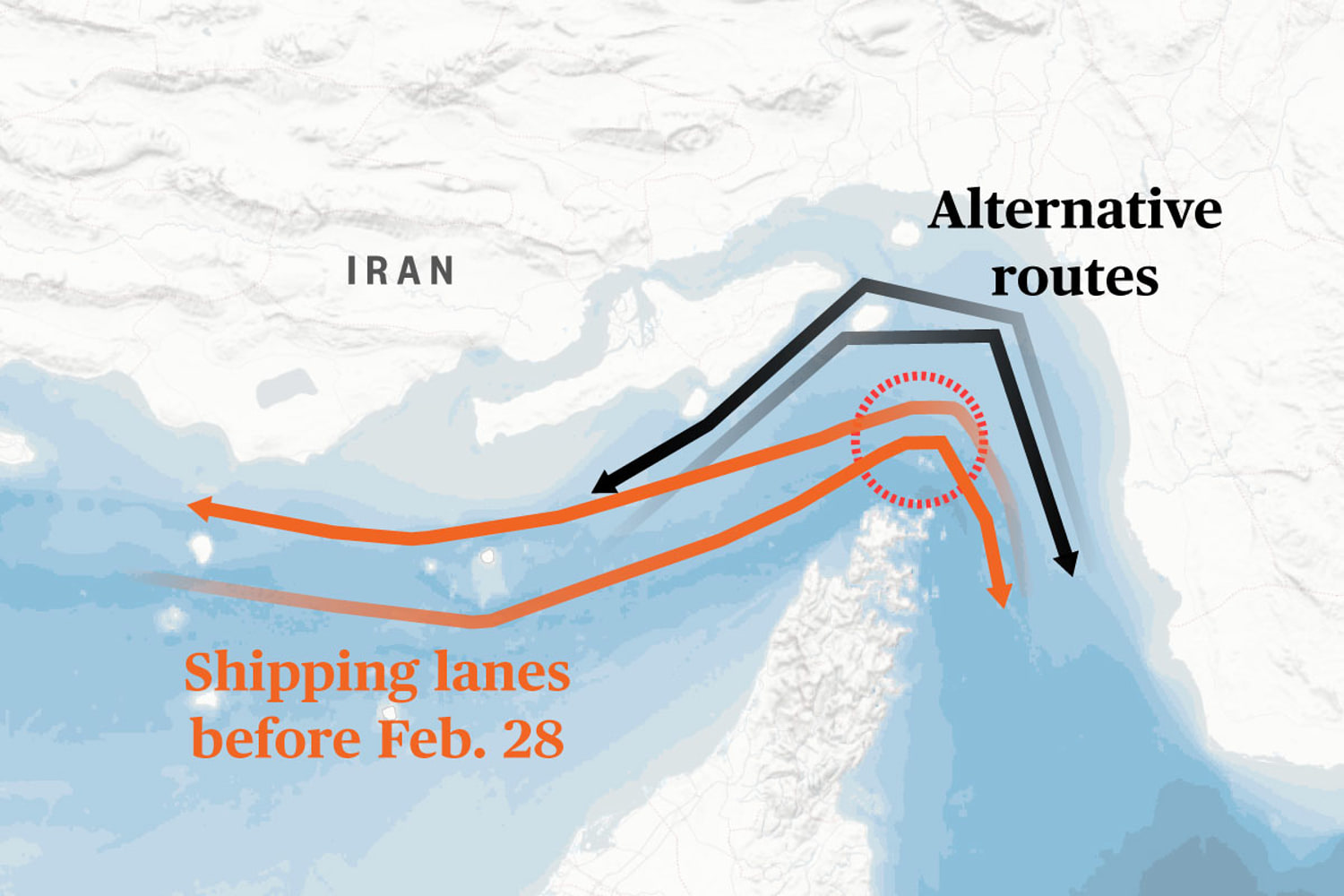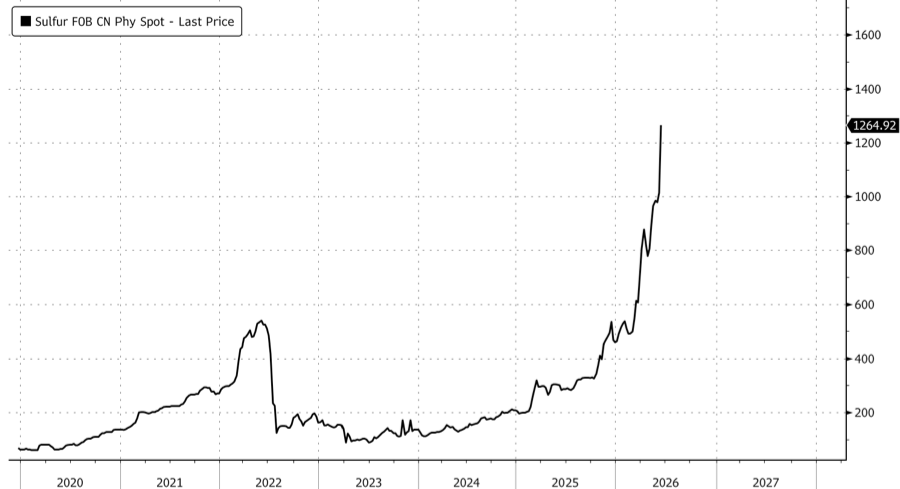
Sulfur is a critical industrial input produced as a byproduct of oil refining and natural gas processing. With roughly half of the world's seaborne sulfur trade trapped behind the Hormuz maritime chokepoint, another 15% stuck in Kazakhstan due to export-logistics blockades, and demand destruction still insufficient across global markets, Bank of America analysts warn that spot sulfur prices have further upside potential.
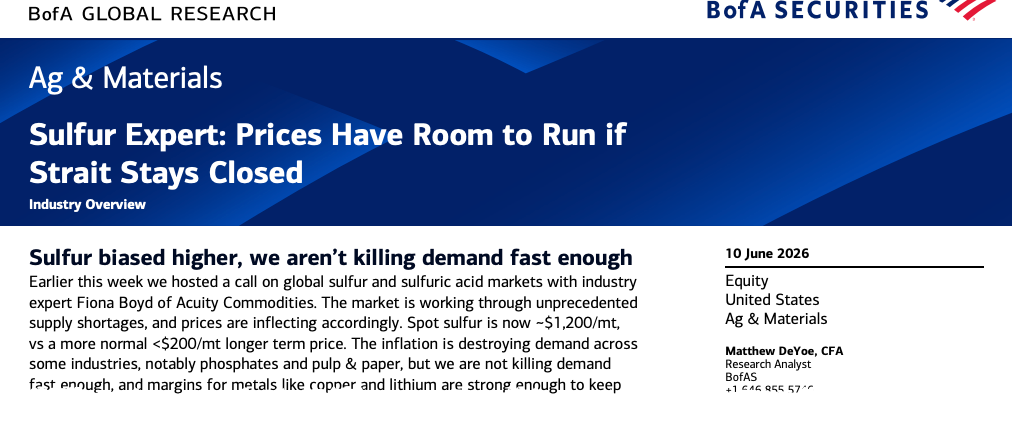
Matthew DeYoe, research analyst at BofA Securities, covering all things ag, materials, and chemicals, wrote in a note, "The market is working through unprecedented supply shortages, and prices are inflecting accordingly. Spot sulfur is now ~$1,200/mt, vs a more normal <$200/mt longer term price."
"The inflation is destroying demand across some industries, notably phosphates and pulp & paper, but we are not killing demand fast enough, and margins for metals like copper and lithium are strong enough to keep prices bid," DeYoe noted.
DeYoe said his team spoke earlier this week with Fiona Boyd of Acuity Commodities about global sulfur and sulfuric acid markets, coming away with a clear takeaway: the market is facing an unprecedented supply shock, yet demand destruction has not gone far enough. With supply trapped behind the Hormuz chokepoint, export logistics disrupted in Kazakhstan, and metals producers still able to absorb higher input prices, Boyd warned that spot sulfur prices likely have more upside from here.
DeYoe warned, "Hormuz + Kazakhstan + Russia = runaway price risk."
He explained further:
Roughly 50% of the world's seaborn traded sulfur is caught behind the SOH and another 15% is trapped in Kazakhstan given export logistic blockades. In total this represents ~30% of the world's sulfur capacity, though it is compounded by sulfuric acid export bans from China and a 3-4mn tonne shortfall to annual Russian exports on account of attacks by Ukraine. Inventory liquidation is helping to buffer, notably in China, which is drawing down its stocks, and Canada, which has ample supply. However, the latter is expensive and slow to mobilize, while the former is running out (Boyd expects 2-4 weeks of safety stock left). Because sulfur is largely a processing byproduct, it is price inelastic, so don't expect more supply because economics are better. Alternatives, such as pyrite, are increasingly sought, but it can't fill the hole. This all puts upside risk to sulfur price.
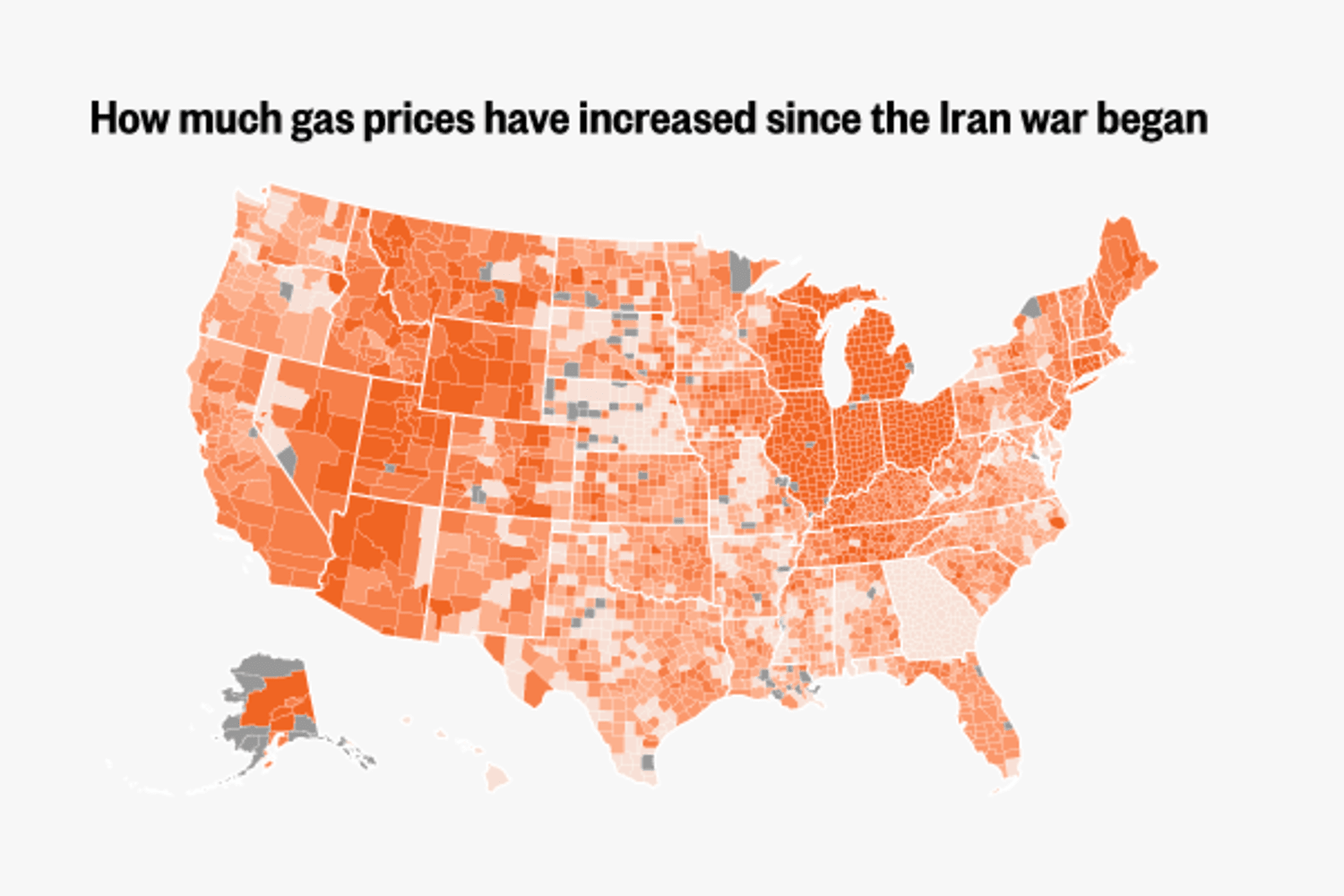
The near-term fix for the energy crunch, which extends far beyond sulfur markets, is reopening the Hormuz chokepoint. Yet DeYoe warned that even if Hormuz were reopened soon, it would take months to rebalance the market and repair damaged assets. This suggests prices will remain elevated through the end of the year.
Related coverage on the sulfur market:
DeYoe highlights that Mosaic is in focus. Sulfuric acid is a key input for phosphate fertilizer production, and Mosaic relies on sulfur from US Gulf Coast refineries. He noted that high sulfur costs could pressure Mosaic's second-half profits and cash flow, potentially requiring a debt raise. He also added that the odds of US government intervention to restrict sulfur exports to protect domestic DAP fertilizer production could increase.
Professional subscribers can find much more on Gulf energy shock here at our new Marketdesk.ai portal.



















































.jpg?branch=production)















































































































































































































.jpg?branch=production&format=jpg&width=1024)