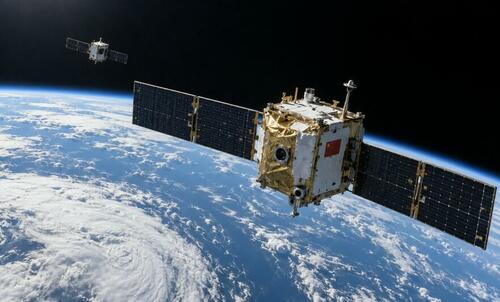
The United States has publicly acknowledged that it already has weapons in orbit, adding a new dimension to a military competition increasingly defined by highly maneuverable satellites - and what they could be used for. Air Force Secretary Troy Meink revealed the space weapons in a Monday disclosure at the Air & Space Forces Association's annual conference.
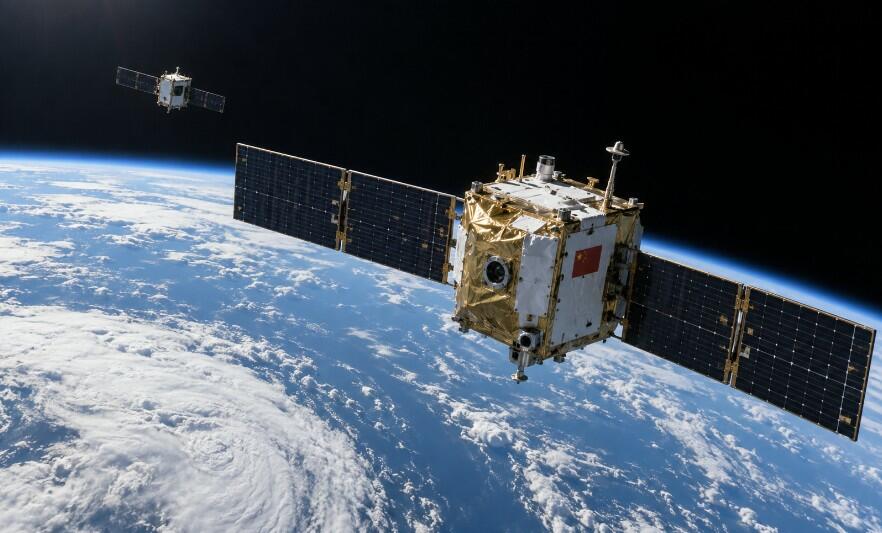
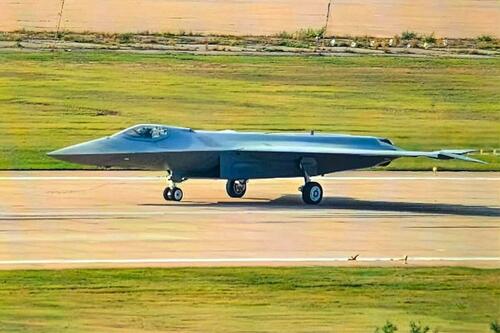
Among other threats, China's 'dogfighting' satellites have caught the attention of US officials.
In March of last year, Gen. Michael Guetlein, then the Space Force's vice chief of space operations, described five Chinese objects conducting coordinated maneuvers in low Earth orbit. The service subsequently identified three Shiyan-24C satellites and two Shijian-6 05A/B objects. He said they were "Dogfighting" (not that they had exchanged fire).
More recent activity includes a Chinese spaceplane releasing a small satellite in June. The object looped around another Chinese satellite before moving back toward the spaceplane, according to LeoLabs tracking data reported by Reuters on September 2. That investigation also examined Chinese research into spacecraft pursuit and capture, while noting that the United States operates its own secretive uncrewed spaceplane.
What changed this week was Washington's willingness to explicitly acknowledge an orbital arsenal. According to Meink, the United States possesses "on-orbit space control weapons capable of defending the joint force against hostile adversary action." He declined to identify the weapons or describe their technical characteristics, testing or employment.
In a subsequent statement to The War Zone, a Space Force spokesperson said the broader space-control mission includes kinetic and non-kinetic methods of disrupting, degrading or, when necessary, destroying an adversary's capabilities. The spokesperson said those capabilities can serve offensive or defensive purposes, but would not specify which particular systems are currently deployed.
What we don't know is whether the deployed weapons are physical interceptors, electronic warfare systems or something else. Nor does a description of the service's overall mission prove that every type of capability mentioned is already operational in orbit.
This goes way beyond satellites too. Space infrastructure supports communications, intelligence collection, missile warning and weapons guidance, while disruption can also affect civilian and commercial activity. The War Zone's reporting highlighted those dependencies alongside the service's acknowledgment.
China has opposed the U.S. announcement, reiterating its position against the weaponization of space. American officials describe their capabilities as necessary to deter attacks and protect forces. Experts interviewed by Reuters warned that secrecy and uncertainty can encourage competing governments to make worst-case assumptions about one another's intentions.
The 1967 Outer Space Treaty is not a blanket prohibition on conventional weapons in Earth orbit. Its central orbital weapons restriction concerns nuclear weapons and other weapons of mass destruction. Separate provisions prohibit military installations, weapons testing and military maneuvers on the moon and other celestial bodies. An acknowledgment of conventional orbital weapons therefore does not, on its own, establish a treaty violation.
Now for a 'complicator' - how do governments distinguish routine operations, surveillance, deterrent signaling and preparations for an attack when much of the relevant hardware and doctrine remains classified?






































































.jpg?branch=production)



















































































































































































































































































































.png?branch=production)