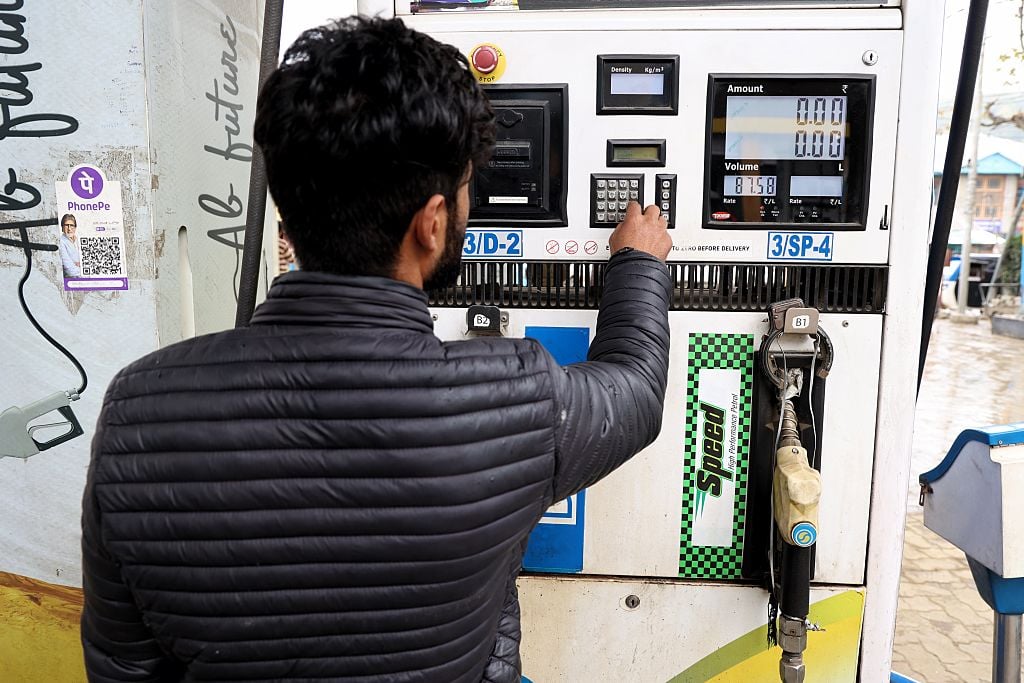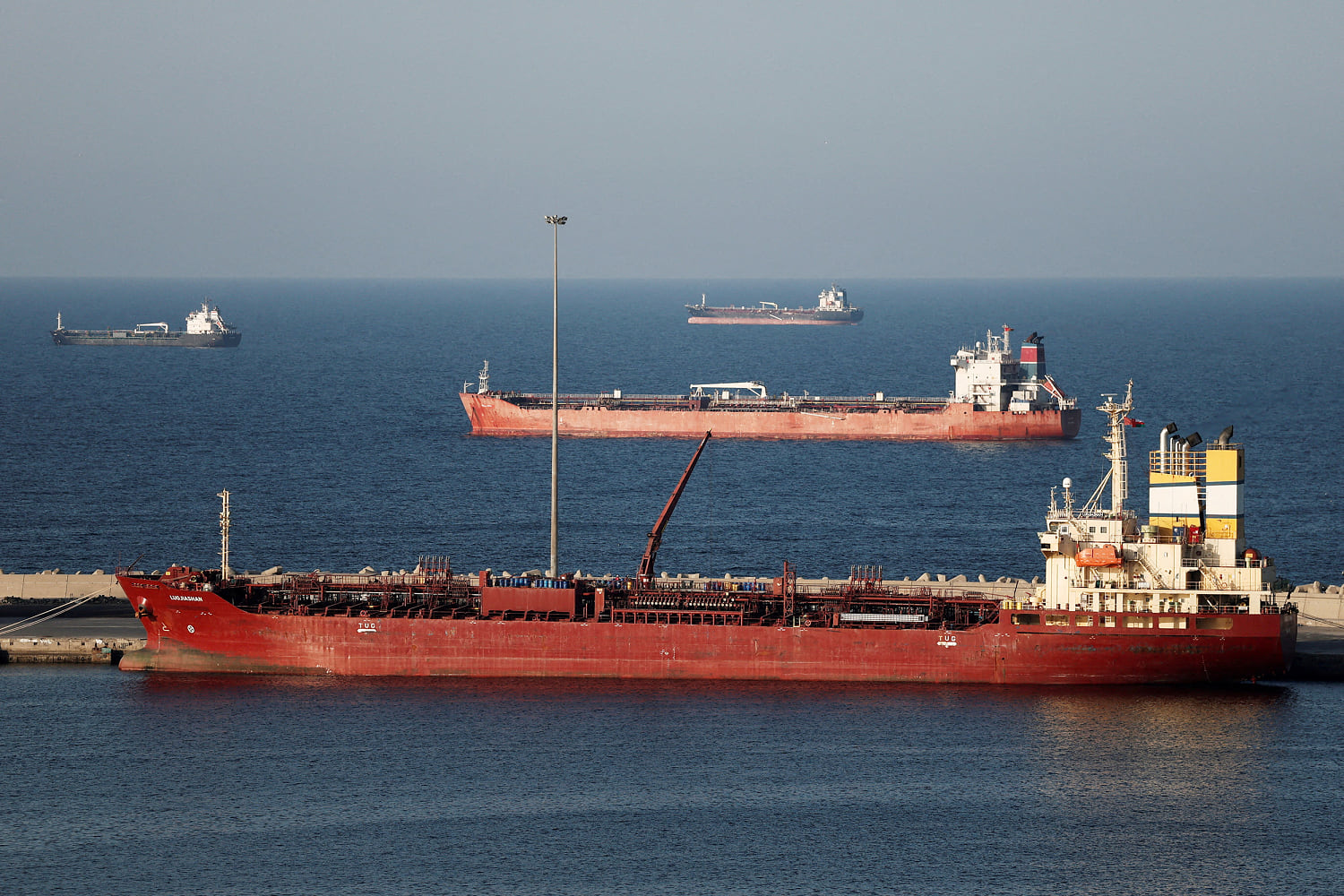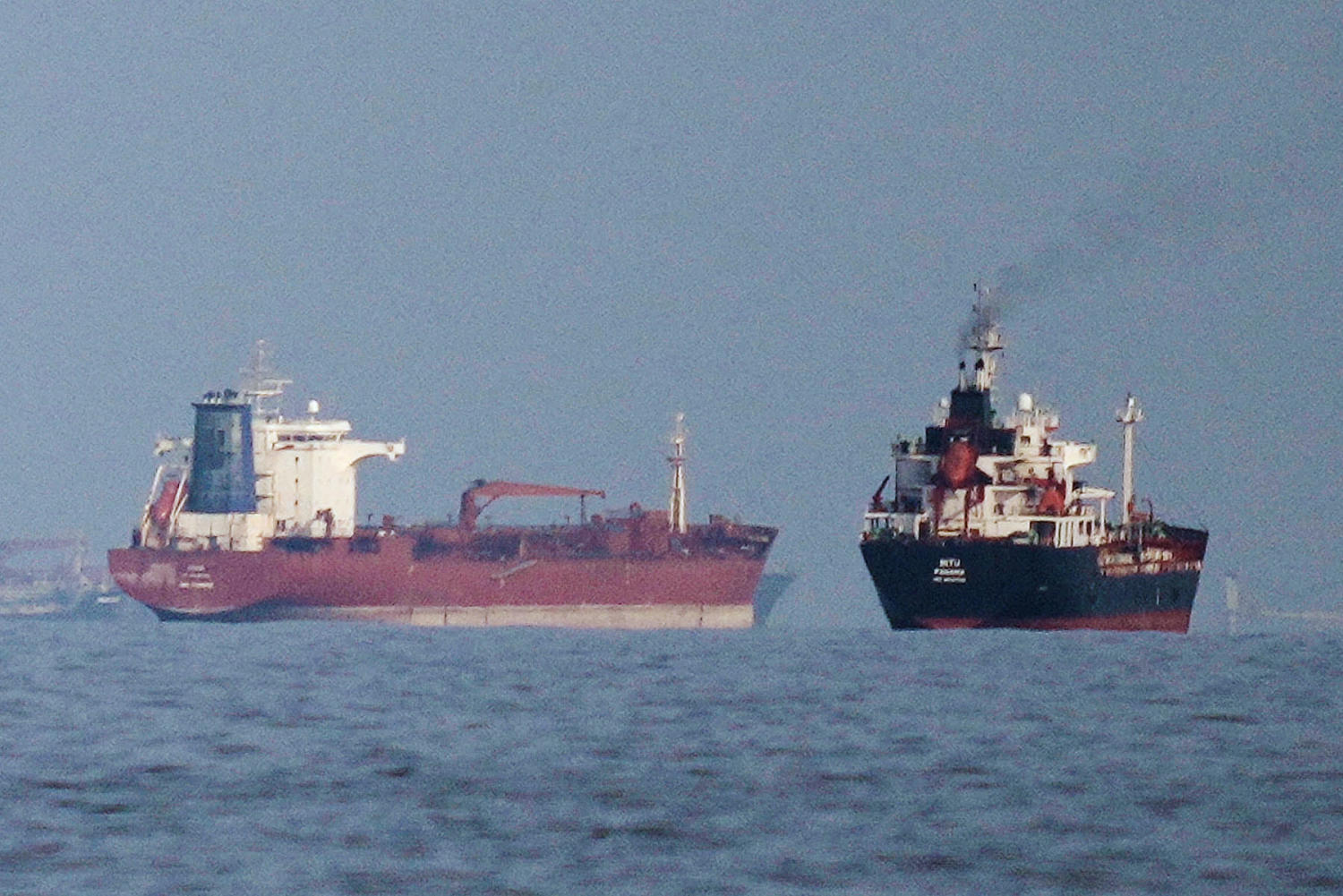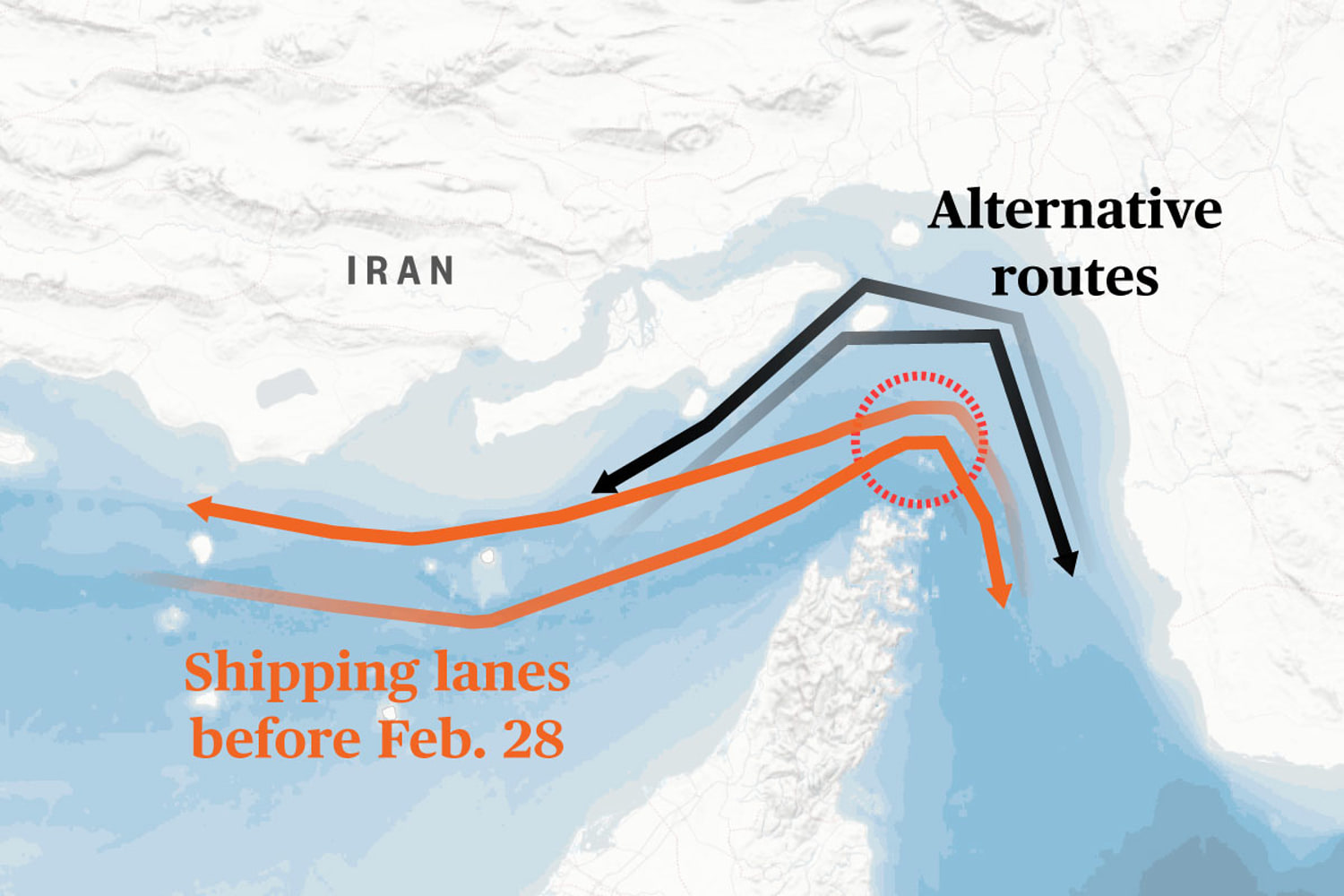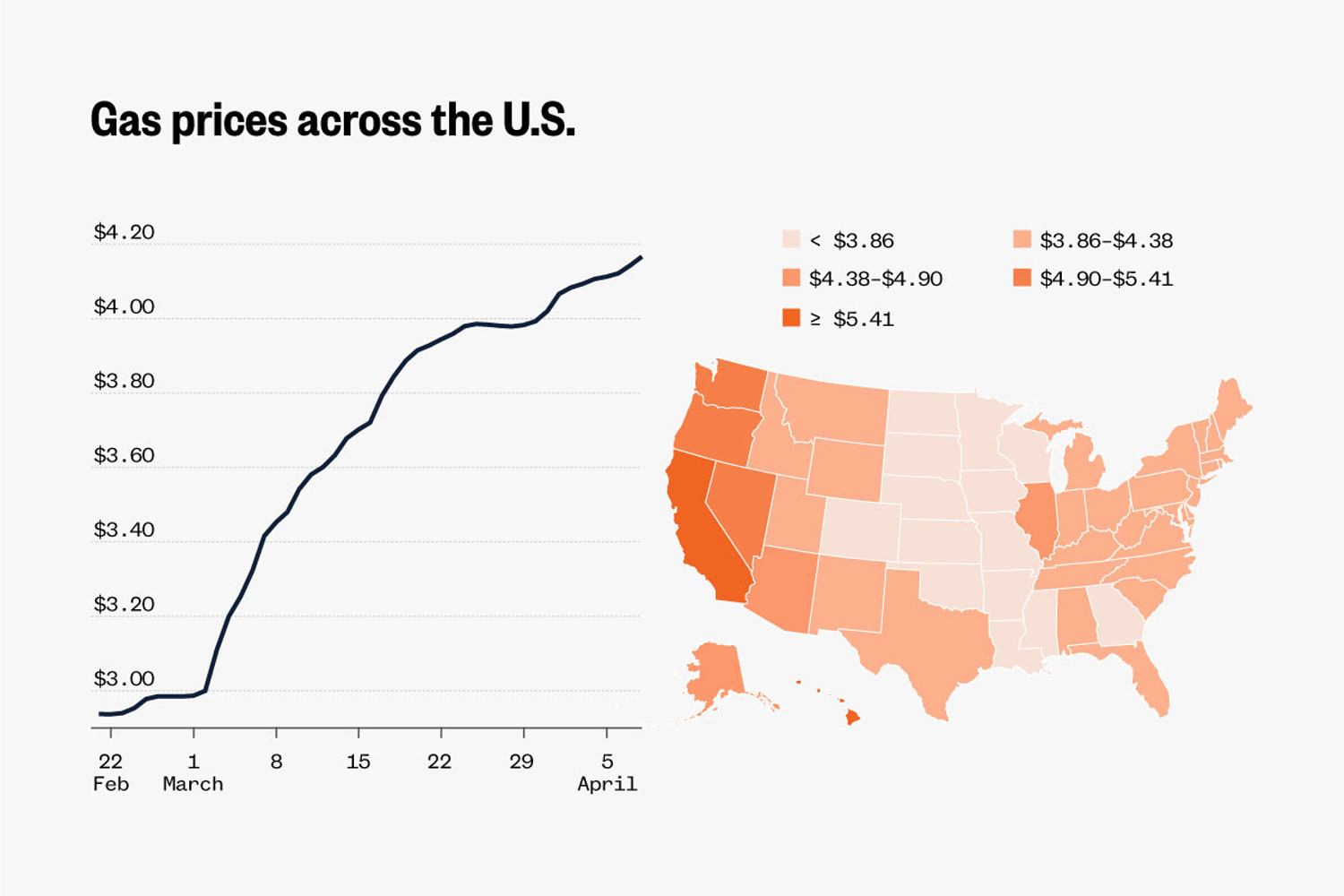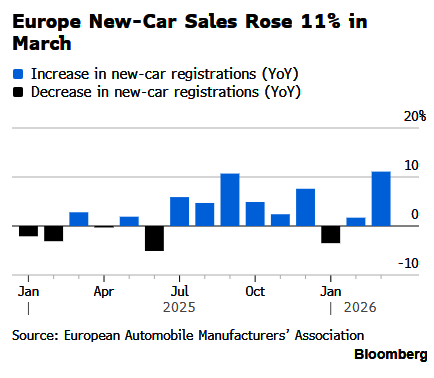
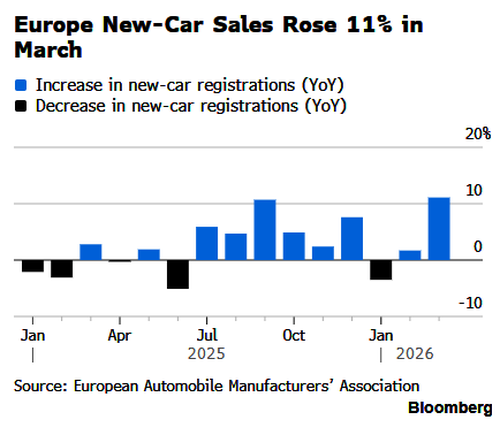
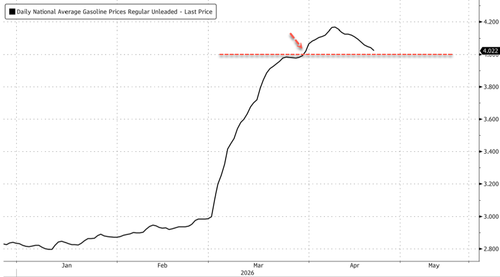
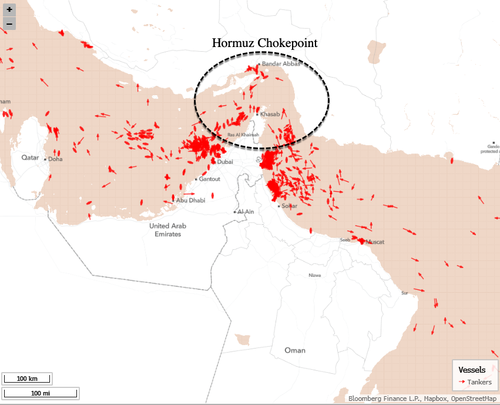
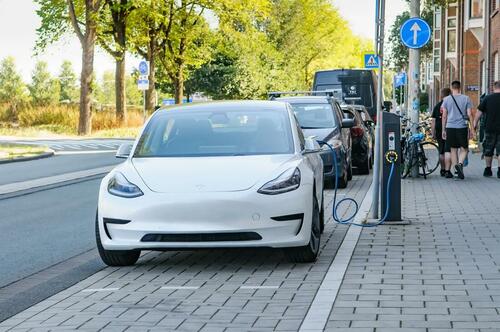
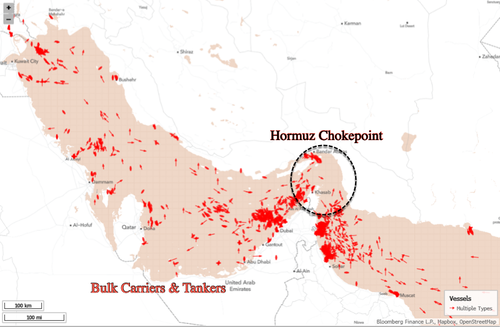
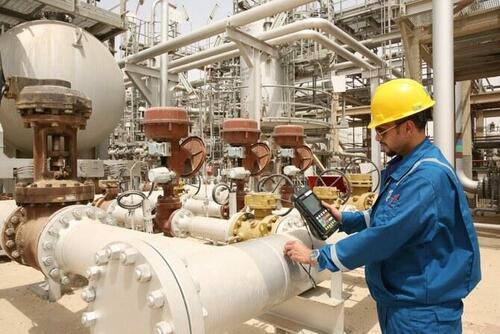
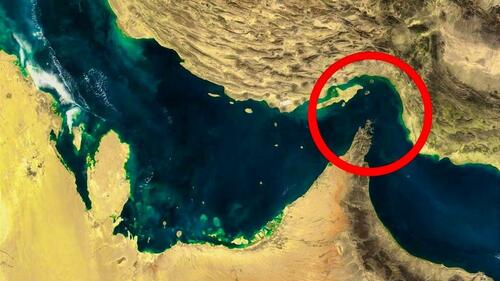
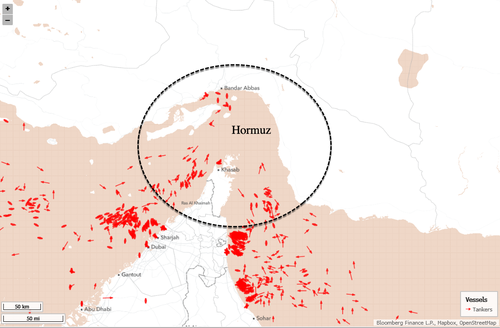
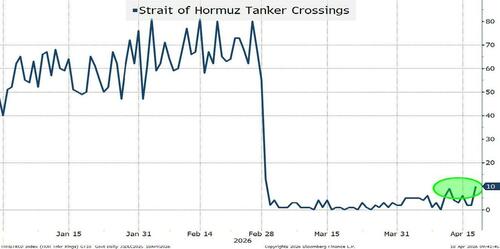
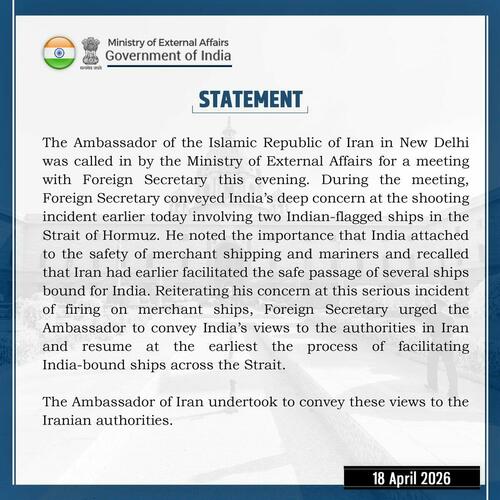
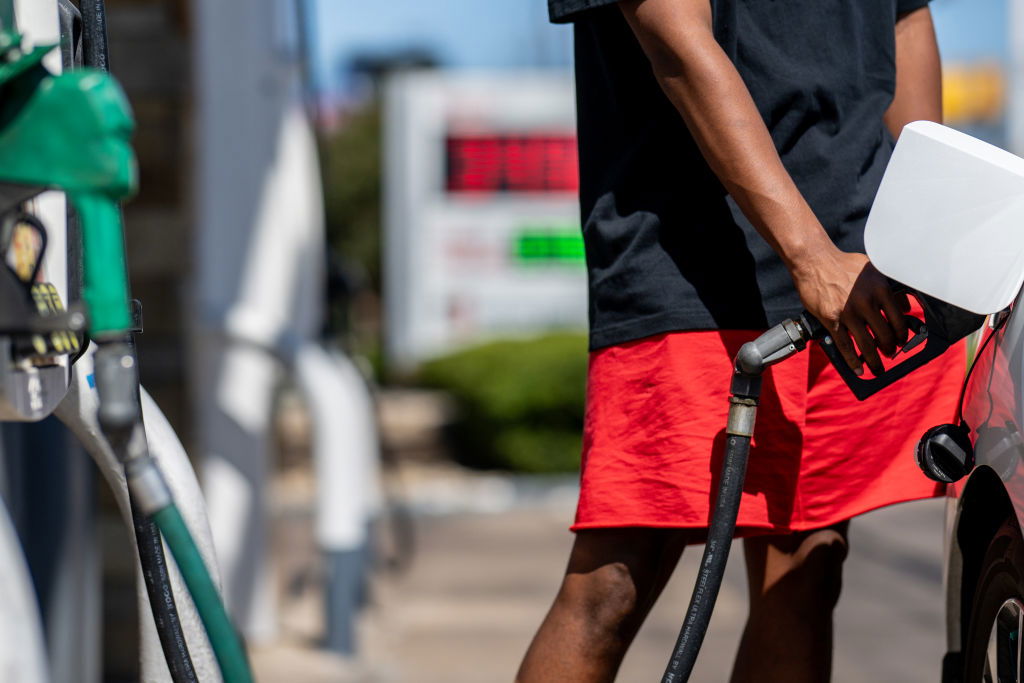
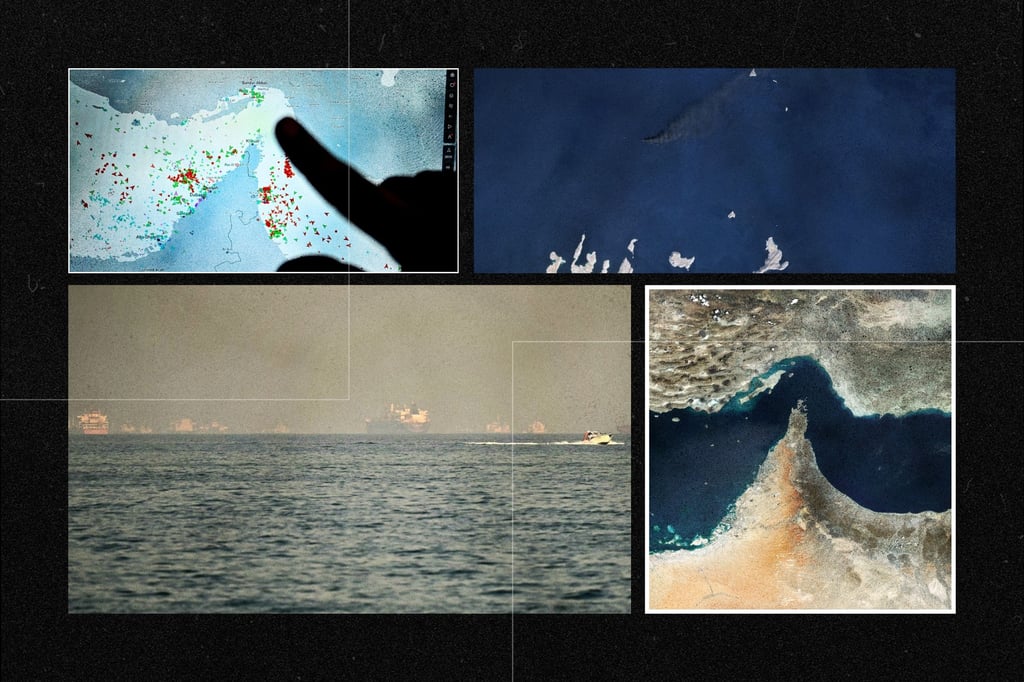
European auto sales posted their strongest monthly gain in almost two years in March, as robust demand emerged for fully electric and hybrid models. The surge in demand follows the US-Iran conflict, which disrupted energy flows through the Hormuz chokepoint. As a result, petrol and diesel prices at the pump in Europe soared. Another issue is China flooding the continent with cheap EVs, undercutting already struggling domestic automakers.
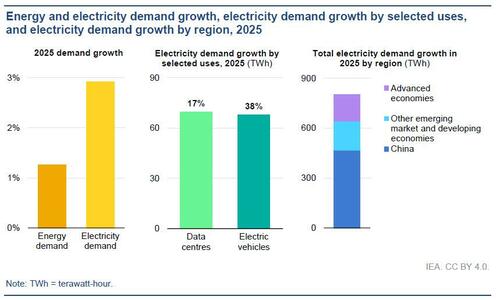
Bloomberg cited new-vehicle registration data for last month showing an 11% rise to 1.58 million, as demand for EVs and hybrids continued to strengthen. EV deliveries jumped 42%, with growth across all major markets, including a 66% increase in German EV sales, driven by subsidies and more affordable models.
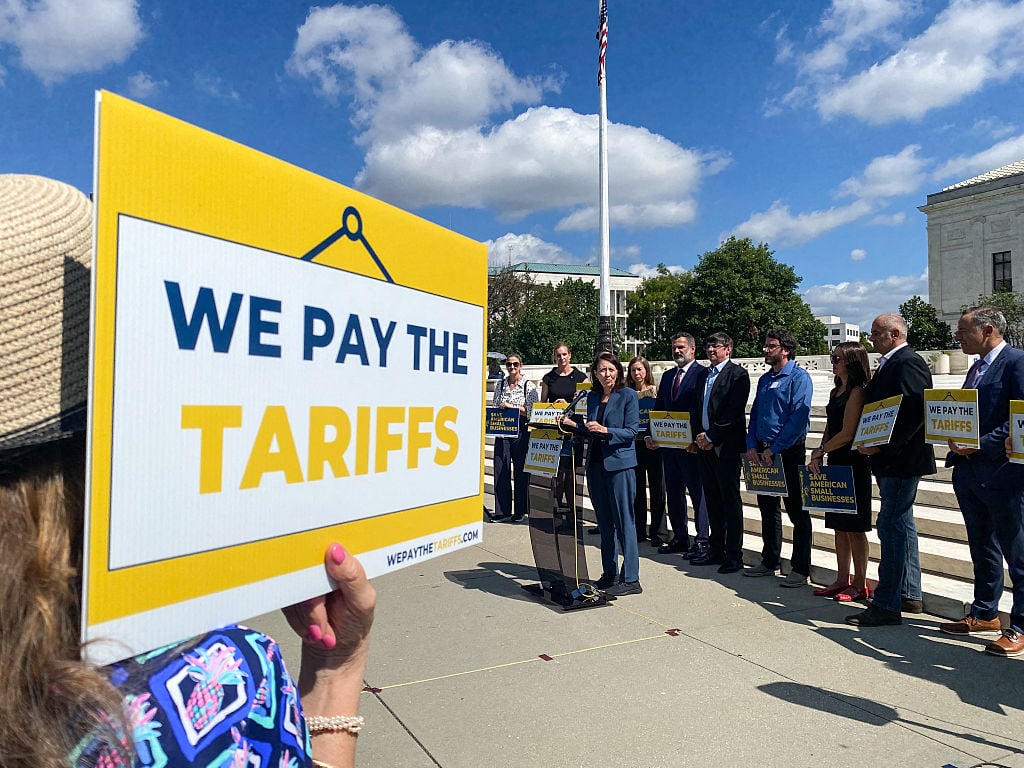
March's surge in demand offers relief for struggling European automakers facing a number of issues, including excess capacity, U.S. tariffs, and weak demand in the Chinese market.
Related:
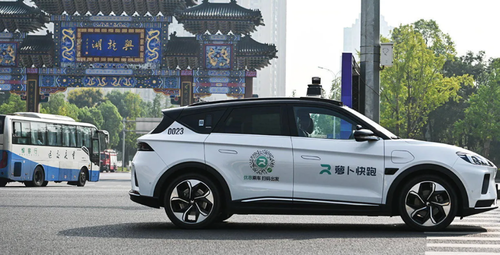
The problem with Europe is that Brussels had the grand idea of allowing Chinese brands such as BYD and Geely to flood the continent with cheap EVs, undercutting rivals such as VW, Porsche, and Mercedes.
Data for the month also showed that BYD more than doubled its European sales in March to 37,580 vehicles and is preparing to start production at its new plant in Hungary later this quarter. This means China's market share in Europe is increasingly growing.
Tesla also participated in last month's surge, with March registrations up 84% to 52,600, leaving it just ahead of BYD year-to-date.
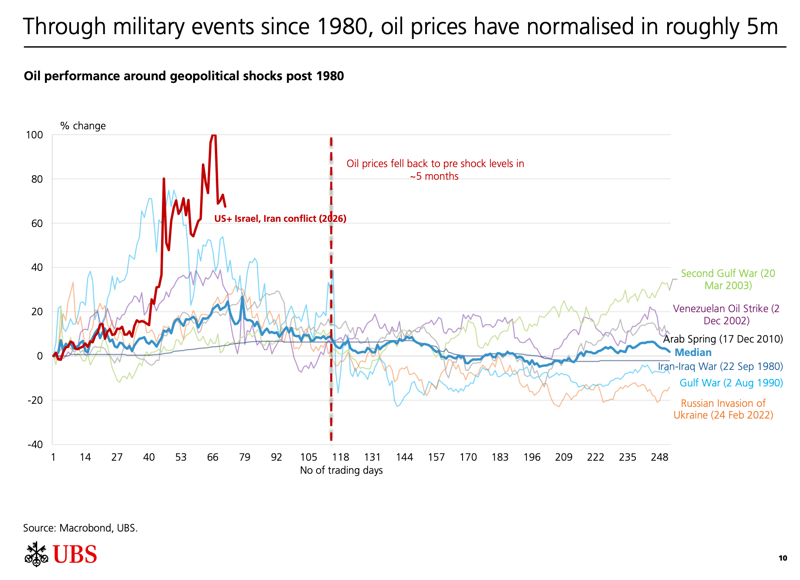
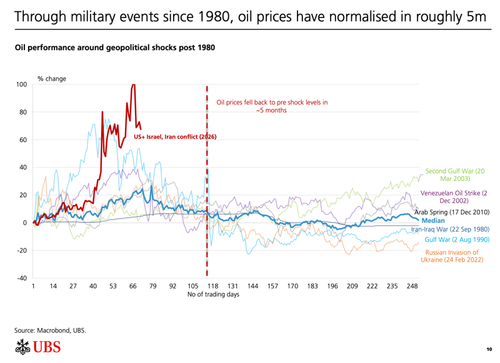
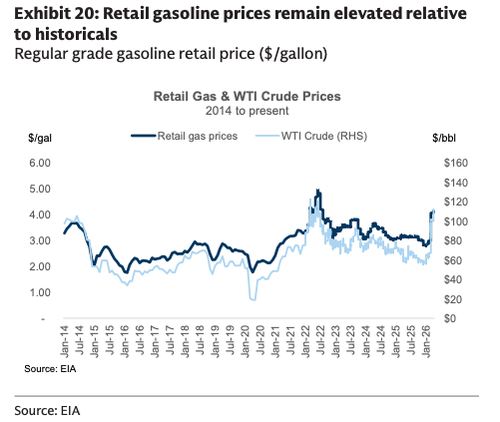
While it is quite obvious that the surge in Brent crude prices into triple-digit territory in March influenced consumer behavior, driving EV purchases because of the fuel shock that unfolded at petrol stations, we take a look at a UBS note showing that, over the past four decades, oil price shocks have typically remained elevated for five months following prior military events.
All of this suggests that, with elevated prices in Europe and elsewhere, EVs will regain consumer favor. Yet in the U.S., with federal subsidies eliminated, demand remains muted.







































































































































































































































































































































.jpg?branch=production&format=jpg&width=1024)

















































































































































































































































































































.png?branch=production&format=jpg&width=1024)