“It is so hard to live ethically in an unethical society.” That lament heard this week from New York Times opinion culture editor Nadja Spiegelman could well be the Democratic Party’s epitaph.
Spiegelman was interviewing two left-wing influencers about how everything from shoplifting to murder may be excusable today in light of the unfairness they see in society.
The podcast, a product of the nation’s newspaper of record, reveled in the moral relativism that has taken over the American left. It featured the ravings of the antisemitic Marxist streamer Hasan Piker, who calmly explained how the murder of United Healthcare executive Brian Thompson was perfectly understandable. His rationalization came from Marxist revolutionary Friedrich Engels, who had called capitalism “social murder.” If capitalists are “social murderers,” then why not kill them? The logic is liberating and lethal for some on the left looking for a license for violence.
Mind you, this same newspaper had once condemned and effectively banned a U.S. senator for writing an op-ed advocating the use of the military to quell violent protests during the summer of George Floyd’s death. The Times even forced out its own opinion editor for having the temerity to publish such an opinion.
But glorifying murder? The suggestion of open hunting season on corporate executives did not appear to shock or repel Spiegelman. After all, we are living in “an unethical society.” She explained that many felt that the murder of Thompson, the father of two, meant that “finally, someone can actually do something about health care.”
Even liberal comedians are practicing a literal version of slapstick. Margaret Cho this week declared that “we need a feral, bloodthirsty, violent Democrat.”
To be fair, Spiegelman did concede that it might seem a bit “scary” for some to start murdering our way to social justice.
She also explained that shoplifting can be justifiable because people are “stealing from Whole Foods — not just for the thrill of it, but out of a feeling of anger and moral justification.”
New Yorker writer Jia Tolentino also contributed to the podcast, titled “The Rich Don’t Play by the Rules. So Why Should I?” She immediately threw in her own experience with “microlooting” and explained why it is arguably moral: “I have, under very specific circumstances. I will say, I think that stealing from a big-box store [isn’t] significant as a moral wrong, nor is it significant in any way as protest.”
She detailed her own past thefts and added, “I didn’t feel bad about it at all, in part because the store was a corporation. And it certainly felt, in a utilitarian sense, I was like, this is not a big deal. Right, guys?”
Not in the confines of the New York Times, where apparently you are entitled to all goods that are fit to pilfer.
The bizarre exchange highlighted the moral chasm that is opening its maw on today’s political left. In my book “Rage and the Republic,” I write about how rage helps people excuse any offense or attack. It dismisses the humanity of others and provides a license to hate completely and without reservation.
It is not really murder or theft if there are no real humans on the other side, is it?
Other columnists have defended such property crimes. Washington Post writer Maura Judkis ran a column mocking shoplifting stories as the “moral panic” of a nation built on “stolen land.” It is reminiscent of those who excused rioting in past summers “as an expression of power” and demanded that the media refer to looters as “protesters.”
Former New York Times writer (and now Howard University Journalism Professor) Nikole Hannah-Jones went so far as to call on journalists not to cover shoplifting crimes.
At its core, it is a denial of transcendent values and rights. It is a decoupling of our society from a grounding in moral or universal truths. It is a trend that extends not only to attacks on individuals but also to attacks on our constitutional system. There is a growing denial of our founding based on Enlightenment principles of natural rights, which come not from government but from God.
Some people seem to have forgotten this. In 2024, a celebrated political journalist memorably asserted that belief in God-given rights is a form of “Christian nationalism” — an odd claim about a concept the nation’s founders literally wrote into our Declaration of Independence.
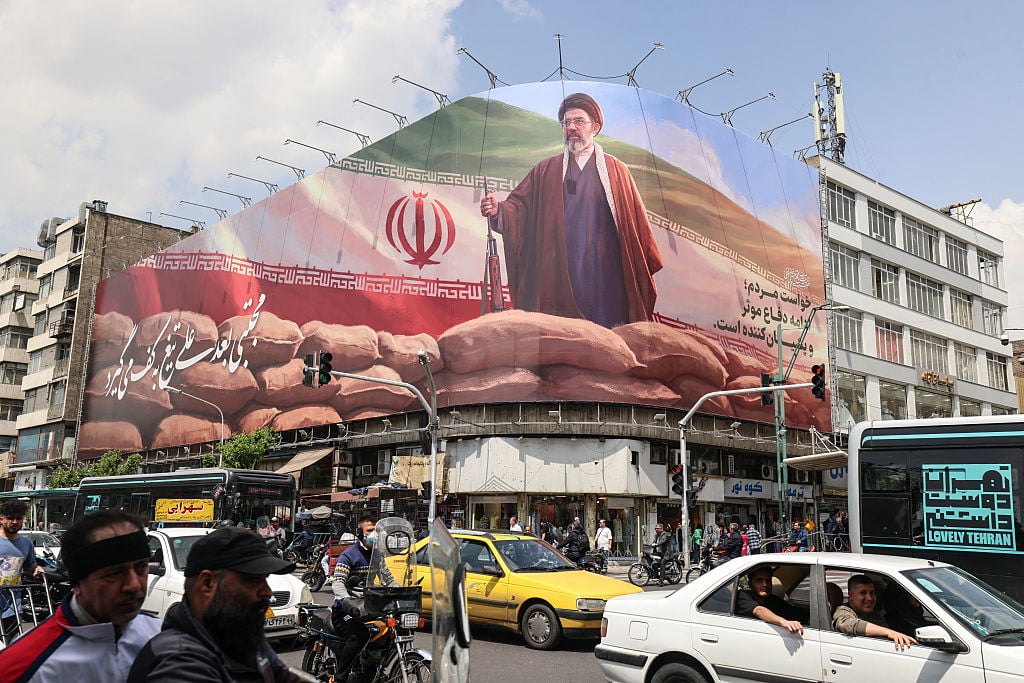
Last year, Sen. Tim Kaine (D-Va.) — a man who represents Thomas Jefferson’s own state — attacked a witness in committee for espousing Jefferson’s immortal assertion that human beings’ natural rights are endowed by their Creator. Kaine disparaged this idea as something worthy of Iran’s mullahs.
The result is the type of moral free-fall and rejection of personal responsibility expressed on the New York Times podcast. Simply because they condemn our entire age as unethical, they feel justified in asserting a moral right to commit any offense, from microlooting to murder. This underpins the increasingly frequent justifications made for attacks against conservatives or law enforcement as a form of “defending democracy.”
Yet the feeling of “anger and moral justification” does not make an act moral. It is the morality of mayhem; a spreading decay within our society. History has shown us how democracies can become mobocracies.
During the French Revolution, journalist Jacques Mallet du Pan observed that “like Saturn, the Revolution devours its children.” The sad fact is, it is not just the danger of fellow revolutionaries deciding that you are the next reactionary to be guillotined. It is the self-consumption of radicals who untether themselves from any higher order or purpose. It is the knowledge that all mortals carry the Saturn gene; all mortals share the capacity to become monsters.
Jonathan Turley is a law professor and the New York Times best-selling author of “Rage and the Republic: The Unfinished Story of the American Revolution.”






















































































































































































































































.png?branch=production&format=jpg&width=1024)






























































































































































































































































































































































































.jpg?branch=production&format=jpg&width=1024)