Authored by Jijo Malayil via Interesting Engineering,
Humanoid robots will soon assist ground crews in Tokyo as Japan Airlines launches a trial to address growing labor shortages.
Starting in May, the Chinese-made machines will assist with moving baggage and cargo on the tarmac at Tokyo’s Haneda Airport, working alongside human handlers.
The initiative, run with GMO Internet Group, comes as Japan faces rising tourism and a shrinking workforce. The trial will continue through 2028, with hopes of easing workloads and paving the way for permanent deployment.
Last month, researchers in Tokyo developed a 2.4 GHz Wi-Fi chip resisting extreme radiation, enabling untethered robot operations in hazardous sites like Fukushima.
Smart baggage handling
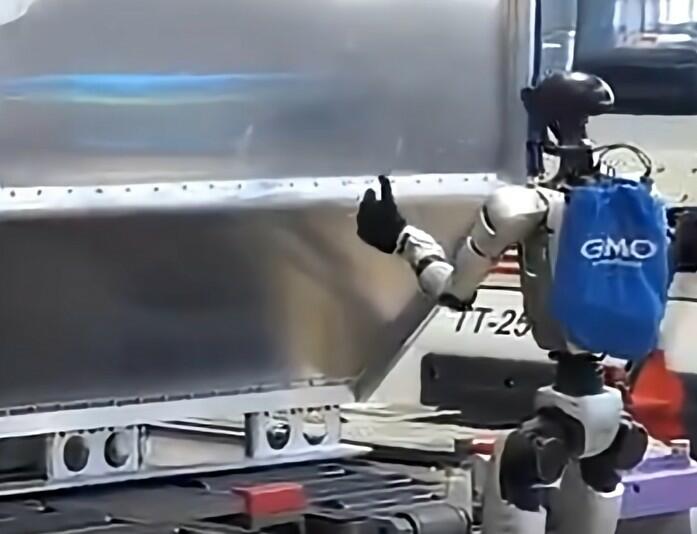
During a recent media demonstration, a compact humanoid robot carefully pushed cargo onto a conveyor belt beside a Japan Airlines aircraft and gestured toward a nearby worker, highlighting early-stage coordination in real airport conditions, reports the Guardian.
Japan Airlines officials said deploying robots for physically demanding tasks could significantly reduce strain on workers and improve overall working conditions. However, the airline emphasized that critical responsibilities such as safety management will remain under human control.
As seen in the footage, the humanoid model, known as G1, stands about 1.32 meters tall and weighs 77 pounds (35 kilograms), with a foldable design for compact storage. It features 23 degrees of freedom, enabling stable and coordinated movement. Equipped with 3D LiDAR, a depth camera, and voice input systems, the robot can navigate and interact effectively. Powered by a 9,000 mAh battery, it operates for up to two hours and can move at speeds of up to 4.5 mph (7.2 km/h).
The Unitree G1 demonstrates an expanded range of motion, highlighting significant gains in flexibility, coordination, and adaptability in humanoid robotics. According to Unitree, its development begins in a virtual setting using Nvidia Isaac Simulator, where the robot is trained to perform complex behaviors.
Engineers create a digital twin of the G1 using motion capture and video data to replicate human actions. These movements are refined through reinforcement learning, allowing the system to improve through repeated simulation. The learned skills are then transferred to the real robot using the Sim2Real approach, enabling smooth execution in physical environments.
“By combining cutting-edge AI technology with the unique flexibility of humanoid forms, the project aims to realize a sustainable operational structure through labor savings and workload reduction,” said Japan Airlines in a statement.
Ground crew augmentation
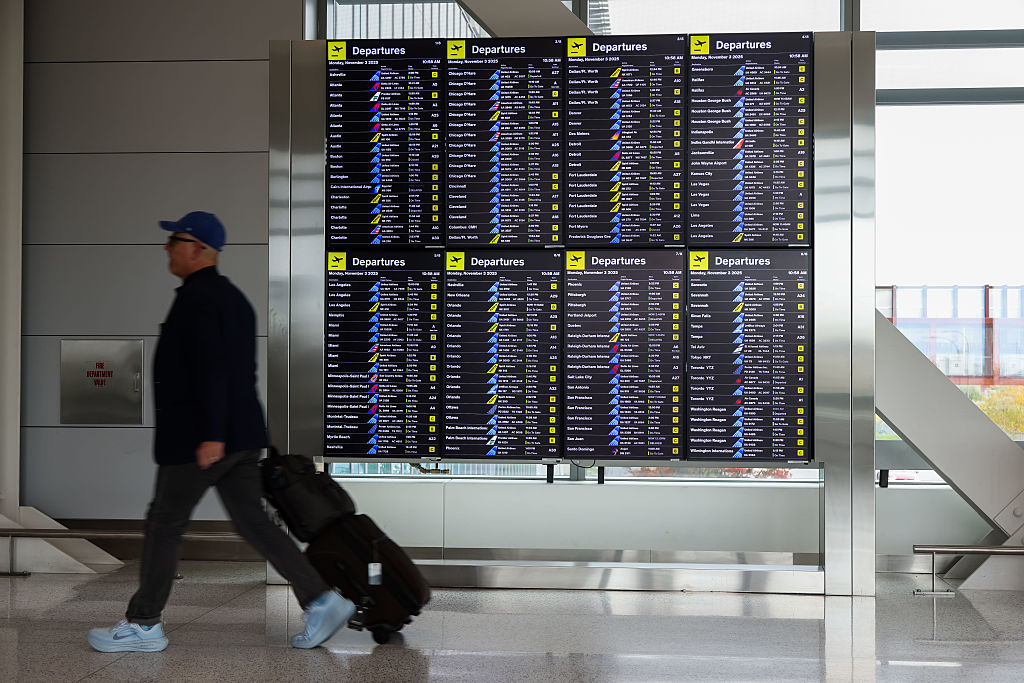
Airport ground operations still rely heavily on manual labor, with workers managing baggage, cargo, and equipment in tight, high-pressure environments. The physically demanding nature of the job, combined with Japan’s shrinking working-age population, has created a growing labor gap across the aviation sector.
The challenge is intensifying as inbound tourism continues to rise. More than 7 million visitors arrived in the first two months of 2026, following a record 42.7 million the previous year, according to the Japan National Tourism Organization. At the same time, demographic trends suggest Japan may require over 6.5 million foreign workers by 2040 to sustain economic growth, even as political pressure mounts to limit immigration, reports The Guardian.
Attempts to automate airport tasks have so far been constrained by the limitations of conventional robots, which struggle in dynamic, unpredictable environments. Humanoid robots are now being considered as a more adaptable solution, as their human-like design allows them to function within existing airport infrastructure without extensive modifications.
The rollout will proceed in stages, starting with detailed observation of operations to identify suitable use cases, followed by testing in simulated real-world conditions. The long-term objective is to integrate robots alongside human workers, assigning them repetitive and physically intensive tasks to reduce strain and improve efficiency. Continuous evaluation will guide development, focusing on safety, performance, and practical deployment, reports Aero Time.




























































































































































.jpg?branch=production&format=jpg&width=1024)






.jpg?branch=production&format=jpg&width=1024)






































































































































































































































































































.png?branch=production&format=jpg&width=1024)