Google's old motto, "Don't be evil," was retired for very good reasons eight years ago.
On Friday, Google joined the growing list of tech firms preparing to deploy AI tools for national security work at the Department of War.
But this note is not about Google. It is about Eric Schmidt's ventures in the drone warfare space, accelerated by the wars across Eurasia.
Recall that earlier this year, Schmidt reportedly visited Kyiv to accelerate his drone-startup ventures, using Ukraine as a laboratory for AI drone warfare.
Ukraine has become the epicenter of FPV drones, interceptor drones, and AI kill chains. This has sent "war unicorns" from around the world rushing to test their new defense tech on the modern battlefield.
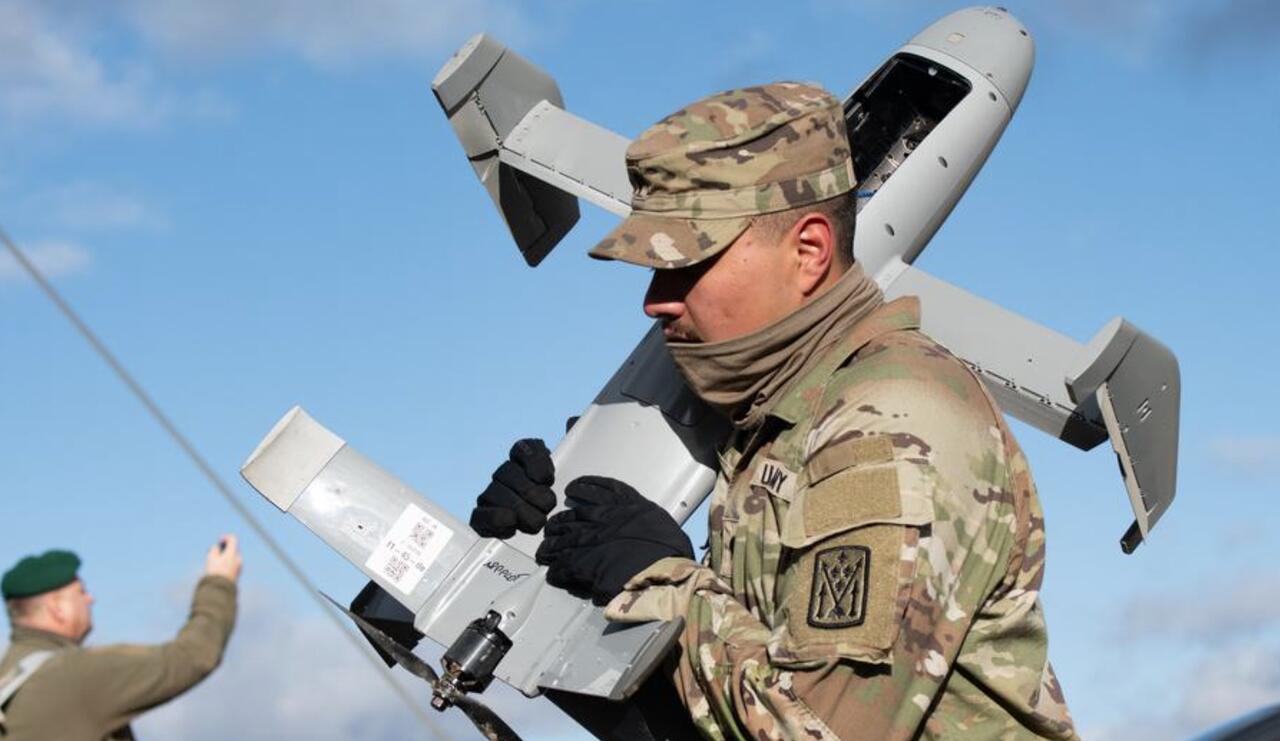
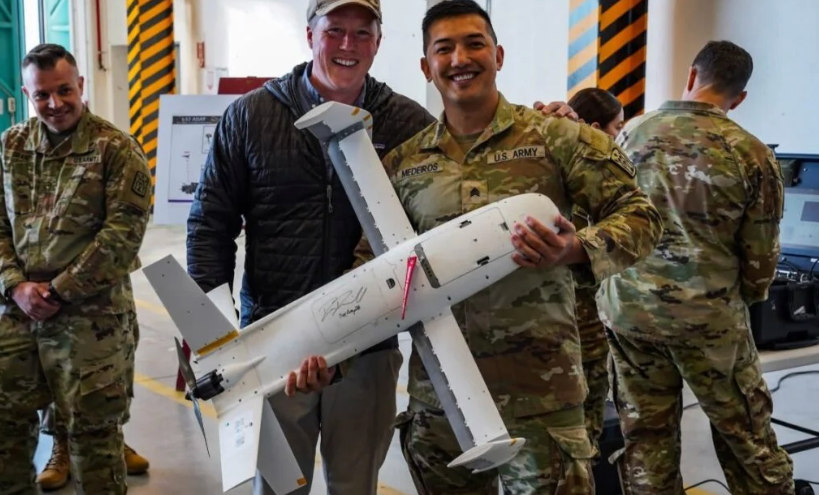
Continuing our coverage on Schmidt's drone warfare ventures, it appears that his California-based Project Eagle, which funded Merops AS-3 Surveyor counter-drone system, has been deployed with U.S. troops in Germany, according to Defense Blog's Dylan Malyasov.
🇺🇸 Army Sec Driscoll to HAC-D: We bought 13,000 Merops interceptor drone systems at $15,000/unit and deployed them to CENTCOM to take down Shaheds. He expects with scale they can get the purchase price down to $10,000.
— Colby Badhwar (@ColbyBadhwar) April 16, 2026
Merops is US built with significant Ukrainian development… pic.twitter.com/wwxvgda9Dw
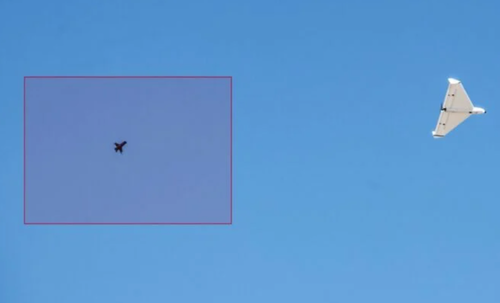
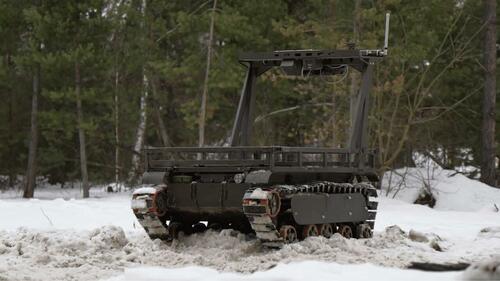
Merops is an interceptor drone that offers a low-cost solution for combating Shahed/Geran-type one-way attack drones without relying on million-dollar interceptor missiles.
Each of these interceptor drones reportedly costs about $15,000 and, as mass production gets underway, the price could fall well below $10,000 per unit.
Malyasov added color around Schmidt's drone ventures:
Merops was developed under Project Eagle, the initiative created by Eric Schmidt that operates through a network of associated companies including Swift Beat, Aurelian Industries, and Volya Robotics, per the Ukrainian Drone Ecosystem Directory. Schmidt's involvement extends beyond funding — his companies have recruited engineers from Apple, SpaceX, Google, and federal agencies to develop AI-guided intercept systems, as reported by Complex Discovery. The initiative began under the name White Stork following Schmidt's meetings with Ukrainian officials in September 2022, before being renamed Project Eagle in 2024, according to Inside Unmanned Systems.
Merops combat testing began by mid-2024, and by November 2025, Ukrainian defenders had credited the system with more than 1,000 intercepts of Russian Shahed-type drones, as Defense Express reported. The platform proved capable enough in combat that when the U.S.-Israeli operation against Iran commenced on February 28, 2026, the Army dispatched 10,000 Merops interceptors to the Middle East within five days, Army Secretary Driscoll told Bloomberg. The Merops interceptors deployed to protect U.S. troops from Iranian Shahed-136 munitions — the same one-way attack drones they had been countering in Ukraine, now aimed at American forces in a different theater.
Earlier this year, Schmidt told the Financial Times that "Future wars are going to be defined by unmanned weapons."
He noted, "The winner of those drone battles will then be able to advance with unmanned ground and maritime vehicles, which move slowly but can carry heavier payloads."
Silicon Valley tech bros are starting to realize that defense tech is the next major growth wave, with capital flooding into drones, AI kill chains, and counter-UAS systems as Trump's war economy begins to ramp up.


































































































































































































































































































































































































































.jpg?branch=production&format=jpg&width=1024)







.jpg?branch=production&format=jpg&width=1024)